

When you're remodeling a bathroom, picking the right paint finish is a bigger deal than you might think. It’s not just about color; it's about making sure your walls can handle the daily onslaught of moisture. The go-to choices are almost always semi-gloss and satin finishes. Their slight shine creates a tough, water-resistant surface that helps fend off peeling paint and mildew growth. This single decision is your best defense in a room that's constantly steamy.
Why Your Bathroom Paint Finish Matters More Than You Think
A bathroom is a unique environment. Unlike a bedroom or living room, it’s a constant battleground against humidity, steam, and direct water splashes. The paint you put on the walls has to do more than look pretty—it needs to be a protective barrier for the underlying drywall. The "sheen," or finish, is what determines how well it can repel water and resist grime.
The Role of Sheen in Moisture Defense
It helps to think of paint finishes on a scale from porous to non-porous. A flat finish, for example, is loaded with pigment but has less of the binder that creates a smooth surface. That makes it more absorbent—exactly what you don't want in a shower environment.
On the other end, finishes with more sheen have more binder. This creates a tighter, less porous surface where water beads up instead of soaking in. That one characteristic is key to protecting your walls.
- Preventing Moisture Penetration: A durable finish stops steam and water from seeping into the drywall, which is the first step toward rot, structural damage, and expensive repairs.
- Inhibiting Mold and Mildew: Since moisture can’t easily penetrate the surface, mold and mildew spores have a much harder time finding a place to grow.
- Simplifying Cleaning: A smoother, glossier wall is incredibly easy to wipe down. Toothpaste splatters, soap scum, and other messes come right off without scrubbing away the paint itself.
A Growing Market Means Better Options
The good news is that paint technology has come a long way. The global paints and coatings market is a massive $202 billion industry, and all that competition fuels innovation. We now have access to incredible mold-resistant formulas and finishes that are more durable than ever before. You can explore more about the global paint industry dynamics to see how these advancements directly benefit homeowners like you.
Key Takeaway: In a bathroom, the paint finish is a functional choice, not just a cosmetic one. Choosing a higher sheen like satin or semi-gloss gives you the protection you need to handle the unique challenges of a high-humidity room, keeping your walls looking great for years.
Understanding The Paint Sheen Spectrum
Before you can pick the right paint finish for a bathroom, you need to get a handle on what "sheen" really is. Think of it as a scale of shininess, starting at zero with flat, non-reflective paint and going all the way up to a mirror-like high-gloss. But this isn't just about looks—it's one of the most important factors in a paint's durability and ability to stand up to moisture.
It all comes down to the paint's recipe. Every paint has pigments for color and binders (resins) that hold everything together. The more binder in the mix, the higher the sheen. This creates a harder, smoother surface that’s much better at keeping water out.
From Matte To High-Gloss
In a bathroom, where steam and splashes are a daily reality, every step up that sheen ladder gives you more protection. It's a trade-off between hiding imperfections and fighting off moisture.
Here’s a quick rundown of your main options:
- Flat/Matte: This finish has a velvety look with zero shine. It's fantastic for hiding bumps and dings on a wall but acts like a sponge, making it a terrible choice for any bathroom.
- Eggshell: Just like its name suggests, this has a very subtle, low luster. It's a bit more washable than flat paint, but it still doesn't have the moisture-blocking power you need in a steamy space.
- Satin: For a lot of people, this is the perfect middle ground. Satin has a soft, gentle glow that feels modern and is durable enough to handle the walls in most well-ventilated bathrooms.
- Semi-Gloss: With a very noticeable shine, this finish is a true workhorse. It’s highly resistant to moisture and super easy to wipe down, which makes it ideal for kids' bathrooms or any space that gets a lot of use.
- High-Gloss: The toughest and shiniest of them all. High-gloss creates an almost glass-like shell. It’s usually too much for an entire wall, but it’s an excellent choice for trim, doors, and cabinets that need maximum durability.
A simple rule for bathrooms: The higher the sheen, the better the defense against moisture and mildew. A glossier finish creates a tighter seal on your walls, preventing water from seeping into the drywall and causing long-term damage.
Getting this concept down is the first step. With this foundation, you're ready to really dig into which specific finish will work best for your project.
Comparing Bathroom Paint Finishes Head-To-Head
When you're standing in the paint aisle, the choice for a bathroom finish almost always boils down to two heavy hitters: satin and semi-gloss. While both are miles ahead of flatter sheens like matte or eggshell for a humid space, they aren't interchangeable. The right pick really depends on how you use your bathroom, the condition of your walls, and the look you're going for.
Making this call is a pivotal moment in any bathroom remodel. It’s no surprise that the architectural coatings market, which includes these high-performance paints, is valued at USD 83.68 billion. This booming market reflects a huge surge in home renovations, giving us access to more specialized and durable products than ever. You can find more details about this growing market here to see how innovation is changing paint technology.
Moisture Resistance: The Deciding Factor
In any bathroom, moisture is public enemy number one. A paint finish's ability to fend off water is directly tied to how long it will last and how well it protects the wall underneath.
Semi-gloss is the undisputed champion here. It's formulated with a higher ratio of binders to pigment, creating a slick, hard, and non-porous film. Think of it like a freshly waxed car—water just beads up and rolls right off. This makes it a fantastic choice for bathrooms that get steamy every day, especially smaller ones with less-than-perfect ventilation.
Satin still puts up a great fight and offers good moisture resistance. Its surface is much tighter than eggshell, but it's not quite as impermeable as semi-gloss. For a powder room or a guest bathroom that only sees occasional use, a quality satin paint provides all the protection you'll need.
Durability And Ease Of Cleaning
Bathroom walls have a tough life. They get hit with everything from toothpaste splatters and soap scum to constant wiping. A good paint needs to do more than just resist steam; it has to stand up to repeated scrubbing without giving up.
Once again, semi-gloss comes out on top. Its slick surface is incredibly easy to clean. Grime, mildew, and stains struggle to get a foothold, and when they do, they usually wipe away with minimal effort. This makes semi-gloss the go-to for kids' bathrooms or any high-traffic space where messes are a regular occurrence.
A satin finish is still plenty durable and can be cleaned without much fuss. However, you do have to be a bit more careful. Scrubbing too hard can sometimes "burnish" the paint, leaving shiny spots that ruin its subtle glow. It's tough, but it's not as bulletproof as its glossier cousin.
The Real-World Difference: Imagine cleaning a dried-on glob of toothpaste from the wall. With semi-gloss, a damp cloth takes it right off, no questions asked. With satin, you might need to work at it a bit more gently to avoid scuffing the finish. That small difference is why semi-gloss is the workhorse for busy family bathrooms.
This flowchart gives you a quick way to decide on a sheen based on your wall's condition.
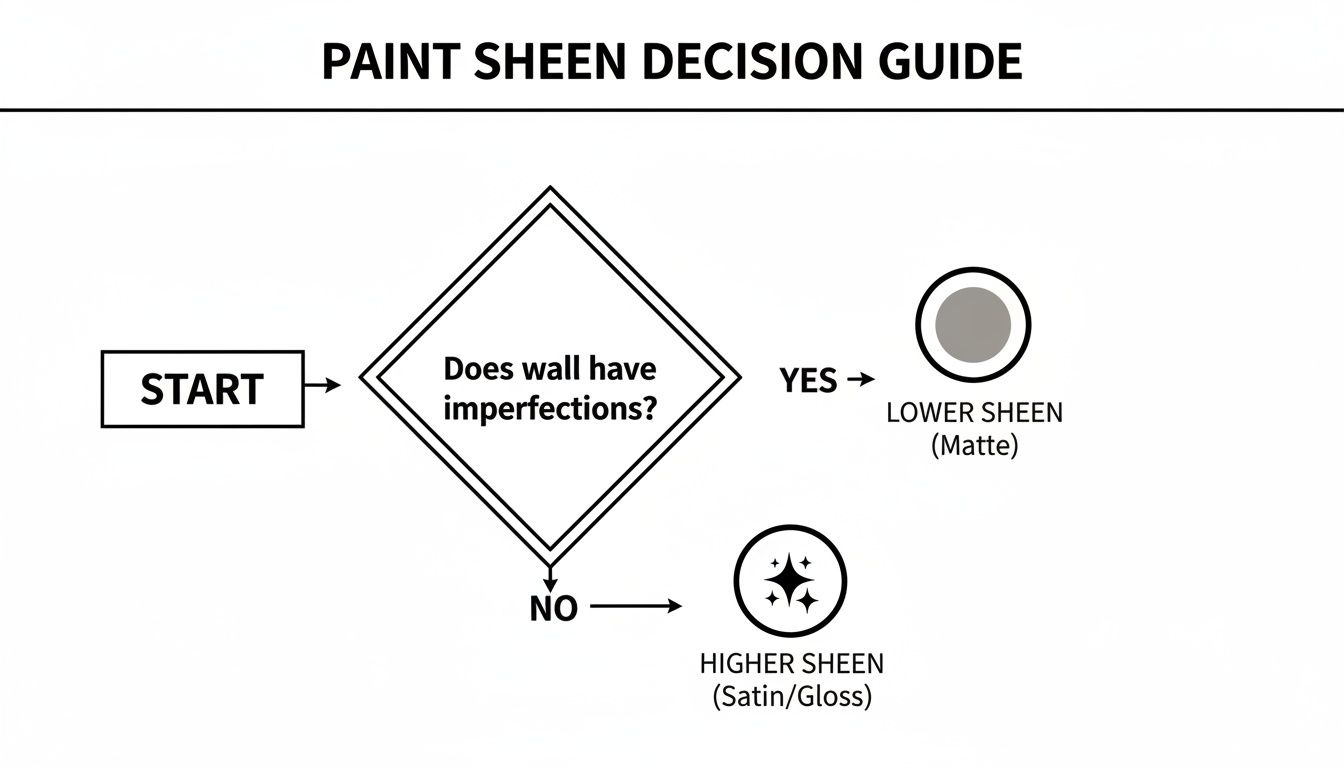
As the chart shows, the smoother your walls are to begin with, the better a higher-sheen paint is going to look.
Aesthetic Impact And Flaw Forgiveness
This is where things get personal. How the paint looks is just as important as how it performs.
The biggest knock against semi-gloss is its high shine. That reflectivity is what makes it so durable, but it's also what makes it so unforgiving. It will put a spotlight on every single imperfection—every little bump, nail pop, or shoddy patch job. On brand-new, perfectly smooth drywall, it can look sharp and clean. On older walls with a bit of texture or a few dings, it can be your worst enemy.
Satin, on the other hand, gives you a much softer, more contemporary look. Its low-angle luster diffuses light, which does wonders for hiding minor surface flaws. This makes it a far more forgiving choice for the typical home, where walls are rarely flawless. The velvety finish just feels more sophisticated and less clinical than the high shine of semi-gloss.
To help you weigh these factors, here’s a quick-glance comparison chart that breaks down how each finish performs in a bathroom setting.
Bathroom Paint Finish Comparison Chart
| Finish Type | Moisture Resistance | Durability & Cleanability | Hides Imperfections | Best For |
|---|---|---|---|---|
| Satin | Good | Good | Good | Walls in powder rooms, guest baths, and well-ventilated bathrooms |
| Semi-Gloss | Excellent | Excellent | Poor | Trim, doors, and walls in high-moisture, high-traffic bathrooms |
Ultimately, the chart reinforces a simple tradeoff: satin offers a more forgiving and modern aesthetic, while semi-gloss delivers maximum protection and cleanability for the toughest bathroom environments.
Choosing The Right Paint Formulation
Picking a durable sheen is a big part of the job, but it’s only half the story. The paint's actual formulation is what gives your walls the muscle they need to stand up to a bathroom's humidity. To really protect your remodel, you have to look past the finish and choose a paint that’s built for damp environments.
This is where paints designed specifically for bathrooms and kitchens really earn their keep. These aren't just marketing ploys; they're engineered with powerful additives that your average interior paint simply doesn't have.
The Power Of Mold- And Mildew-Resistant Paint
In any bathroom, the real enemy isn't just water—it's what thrives in its presence. Mold and mildew can turn a gorgeous new paint job into a spotted, unhealthy mess in no time. Specialized bathroom paints are designed to stop this problem before it starts.
These paints contain antimicrobial agents, often called mildewcides, that are mixed right into the formula. These active ingredients prevent mold, mildew, and other fungi from growing on the paint’s surface. It creates a shield where spores just can't get a foothold.
The demand for these types of paints has created a major niche in the market. Anti-mould bathroom paint is part of a global industry expected to hit $638 million. This growth shows just how seriously homeowners are taking moisture issues. You can discover more insights about the anti-mould paint market and how it’s changing the products on store shelves.
Key Insight: A "bathroom paint" isn't just a label. It means the formula has active ingredients that fight fungal growth, providing a crucial layer of protection that a durable sheen alone can't offer.
Water-Based Latex: The Modern Standard
When it comes to interior jobs, and especially bathrooms, water-based (latex) paints are the go-to for professionals and DIYers alike. Unlike old-school oil-based paints, modern latex formulas are more flexible. This elasticity allows the paint to expand and contract with the constant temperature and humidity swings in a bathroom, preventing ugly cracks from forming.
On top of that, latex paints have some huge practical benefits:
- Low Odor: They release far fewer volatile organic compounds (VOCs), making the painting process much safer and more comfortable.
- Fast Drying: Latex paint dries to the touch quickly, which means you can get that second coat on sooner and have your bathroom back up and running in less time.
- Easy Cleanup: Forget harsh chemicals. Brushes, rollers, and spills clean up easily with just soap and water.
The Non-Negotiable First Step: Primer
Finally, we can’t talk about paint formulation without stressing the importance of primer. Using a moisture-blocking or stain-blocking primer before your topcoat is an absolute must in a bathroom.
Primer does a few critical things: it helps the paint stick firmly to the wall, stops old water stains or marks from bleeding through your new color, and provides the first line of defense against moisture.
Skipping the primer is one of the most common shortcuts that leads to peeling and bubbling paint later on. Our guide on the best paint for bathroom walls has more expert prep tips. Simply put, a quality primer ensures your chosen paint can perform exactly as it was designed to.
Our Professional Recommendations for Walls, Ceilings, and Trim
Walking through the paint aisle can be dizzying, but picking the right finish for your bathroom gets a lot simpler when you match the paint to the surface. Your walls, ceiling, and trim each have their own unique battles to fight—from fending off water splashes to hiding slight imperfections. Here’s how we, as professionals, break it down for a finish that looks great and lasts.
The Best Paint Finish for Bathroom Walls
When it comes to bathroom walls, the conversation almost always boils down to two contenders: satin and semi-gloss. The best choice for you really depends on how you use the bathroom and the look you're going for.
-
Satin Finish: This is our go-to recommendation for most primary and guest bathrooms. Satin offers a subtle, velvety sheen that's tough enough to resist moisture and wipes clean easily. It strikes a beautiful balance, giving you a modern, sophisticated look that’s also better at hiding minor dings or bumps in the wall than a glossier paint.
-
Semi-Gloss Finish: For the bathrooms that see a lot of action—think high-traffic family or kids' bathrooms—semi-gloss is the workhorse. Its higher shine creates an extremely durable, almost non-porous surface that can handle heavy condensation and frequent scrubbing without breaking a sweat. It will show imperfections more readily, but its protective power is second to none in a challenging environment.
The Ideal Sheen for Bathroom Ceilings
Ceilings are a special case in a bathroom. They take the brunt of rising steam and are often where you’ll spot drywall flaws most easily. For that reason, our recommendation is a specialty flat or matte bathroom paint.
Don't confuse these with standard flat paint. Modern bathroom-specific formulations are built with antimicrobial additives to fight mildew growth and are far more washable than their traditional counterparts. Their non-reflective nature is fantastic for concealing minor flaws, giving your ceiling a clean, seamless look. A standard flat paint would be a mistake, but these specialty products truly deliver the best of both worlds.
Finishing Touches for Trim, Doors, and Cabinets
Now for the high-touch surfaces: your trim, baseboards, window sills, doors, and cabinets. For these, semi-gloss is the undisputed champion. These are the areas that get handled, bumped, and scuffed daily.
A tough semi-gloss finish acts like a hard, protective shell that you can scrub clean over and over again. Its noticeable shine also creates a sharp, clean contrast with the softer wall finish, making the room's architectural details pop. It’s a critical finishing touch, and you can learn more about how our expert interior services get these details just right for a flawless result.
Application And Maintenance For Lasting Results
Even the best bathroom paint will fail if you don't get the prep work right. Honestly, your success is determined long before you ever crack open a can of paint. A flawless, long-lasting finish absolutely depends on a clean, dry canvas.
Start by giving the walls a good scrub with a mild degreaser or a TSP substitute mixed with water. This simple step cuts through all the gunk—soap scum, hairspray, and body oils—that can ruin paint adhesion. Once it's clean, let it dry completely before you even think about taping or priming.
Painting And Curing In A Humid Space
Painting a bathroom is a bit different because of all the moisture. Using quality brushes and a good roller will give you that smooth, even coat you need for a solid protective barrier. Try to paint on a dry day, and keep a fan running to get the air moving both during and after the job.
It's easy to get impatient, but even though latex paint feels dry in a few hours, it isn't ready for a steamy shower. The paint needs time to fully cure to build up its moisture resistance.
Pro Tip: I always tell my clients to wait at least 24-48 hours before using the shower. Hitting fresh paint with steam too early is a recipe for streaks, blisters, and peeling, and you'll undo all your hard work.
Keeping Your Finish Fresh
The good news is that once the paint is fully cured, upkeep is pretty straightforward. A soft sponge with a mild, non-abrasive cleaner is all you need to handle most smudges and splatters. Stay away from harsh chemicals or scouring pads, as they’ll just dull the sheen and break down that protective layer.
Every so often, do a quick visual check for any trouble spots, like paint peeling around the shower trim or bubbling on the ceiling. Catching these problems early saves you from a much bigger headache down the road. If you do spot something concerning, it's smart to learn how to fix water-damaged drywall before it escalates. A little proactive care goes a long way in keeping your bathroom looking great for years.
Answering Your Top Questions About Bathroom Paint
When you're wrapping up a bathroom project, a few lingering questions about paint are bound to pop up. Let's clear up some of the most common ones so you can finish the job with total confidence.
Can I Use Matte or Flat Paint in a Bathroom?
This is a tricky one. Traditional flat paint is a hard no for bathrooms—it's just too porous and acts like a sponge for moisture. But paint technology has come a long way. You can now find specialty "washable matte" paints designed specifically for high-humidity areas, packed with additives to help them stand up to steam.
Even so, for a main bathroom that sees a shower running every day, you're still better off with the proven durability of a satin or semi-gloss finish. I'd only consider one of those specialty mattes for a guest powder room where steam and splashes are rarely an issue.
How Long Should I Wait to Shower After Painting?
I know it's tempting to get your bathroom back in service, but this is where patience really pays off. While latex paint might feel dry in just a few hours, it's not done working. It needs time to fully cure—that's the chemical process where it hardens and builds its full moisture-blocking strength. Hit it with steam too soon, and you risk ugly streaks, bubbles, or even peeling.
As a rule of thumb, wait a minimum of 24 to 48 hours before turning on that shower. Always double-check the paint can, though. The manufacturer's instructions are your best guide, as curing times can differ.
Is Bathroom Paint Actually Different from Regular Paint?
Yes, and the difference is huge. When you see a can labeled for "bathrooms and kitchens," it's not just marketing. This paint is specifically engineered for a life of high humidity. It's formulated with more binders, which creates a tighter, more water-resistant surface film.
More importantly, it’s packed with mildewcide and other antimicrobial additives that actively fight off mold and mildew growth. While a top-tier semi-gloss paint offers decent protection, a dedicated bathroom paint gives you that extra layer of defense that makes all the difference in a damp space.
Ready to bring your bathroom vision to life with professional results? Garner Construction & Maintenance offers expert interior painting and full-scale remodeling services to ensure every detail is perfect. Visit our website to schedule your consultation today!