

Let's get straight to the point: what does a small bathroom remodel actually cost? For a typical 40-square-foot bathroom, you can expect the total project to fall somewhere between $6,000 and $12,000.
This is a solid starting point that covers common mid-range updates—think new fixtures, fresh tile, and professional labor, but without moving any walls or plumbing around. Of course, the final number on your invoice will shift based on the materials you fall in love with and how much work is involved.
Unpacking Your Remodel Budget
Seeing that price range is one thing, but understanding what it means for your project is another. A remodel budget isn't just one big number; it's a series of smaller decisions that add up. Every choice, from the tile under your feet to the finish on the faucet, contributes to the final financial puzzle.
Think of it like ordering a pizza. The plain cheese has a base price, but every topping you add—pepperoni, mushrooms, extra cheese—increases the total cost. A simple fixture swap in your bathroom is like that plain pizza, while moving plumbing lines to fit a dream layout is like ordering it with everything.
Small Bathroom Remodel Cost At a Glance
To give you a clearer picture, here's a quick breakdown of what you can expect to pay based on the project's scope. This table helps visualize how costs scale from a simple cosmetic update to a complete overhaul.
| Project Scope | Typical Size (sq ft) | Average Cost Range |
|---|---|---|
| Basic Refresh | 35-40 | $3,000 - $7,000 |
| Mid-Range Remodel | 35-40 | $6,000 - $12,000 |
| High-End/Gut Renovation | 35-40 | $15,000+ |
As you can see, even for the same size room, the choices you make have a huge impact. Now, let's dig into the specific factors that drive those numbers.
Core Cost Factors
The national average is a great guidepost, but a few key variables will ultimately determine where your project lands. Homeowners across the U.S. are generally budgeting between $6,000 and $12,000 for a full remodel of a compact, 40-square-foot bathroom. This often works out to around $150 per square foot for those popular mid-range updates.
So, what pushes that number up or down? It really comes down to these four things:
-
Scope of Work: Are we talking about a simple cosmetic facelift (new paint, a modern vanity) or a full-blown gut renovation where you're taking the room down to the studs? The more you tear out and replace, the higher the cost.
-
Material Quality: This is where your personal taste really affects the budget. Standard ceramic tile and a big-box store vanity are easy on the wallet. But if you have your heart set on natural stone, custom cabinetry, or designer fixtures, be prepared for the price to climb accordingly.
-
Labor Complexity: Skilled labor is almost always the single biggest line item on your invoice. The most effective way to keep this cost in check is to stick with your bathroom's existing layout. Moving a toilet, shower drain, or electrical outlets requires significant—and expensive—work from licensed plumbers and electricians.
-
DIY vs. Professional: You can definitely save some cash by rolling up your sleeves and handling tasks like demolition or painting. If you want to see how much professional painting might cost, you can check out our handy guide on interior painting cost estimators. Just remember to leave the plumbing and electrical to the pros; it's not worth the risk.
Figuring out how to balance these variables is the key to creating a realistic plan. A good contractor will help you weigh your vision against your budget, making sure there are no surprises once the work begins.
Where Your Remodel Budget Really Goes
Ever looked at a contractor's estimate and wondered how that one big number breaks down into so many different line items? Thinking about your remodel budget is a lot like slicing up a pie. You might be dreaming about that gorgeous new tile or the sleek, modern fixtures, but the biggest piece of that pie almost always goes to something you don't even see: skilled labor.
Getting your head around this is the single most important part of budgeting. The final price tag on your new bathroom isn't just what the materials cost—it's the cost of those materials plus the expertise it takes to install everything perfectly. Nailing down this breakdown is your financial roadmap, helping you spend wisely and avoid any nasty surprises when the final bill arrives.
This chart gives you a quick visual on what different budget levels might look like for a typical small bathroom project.
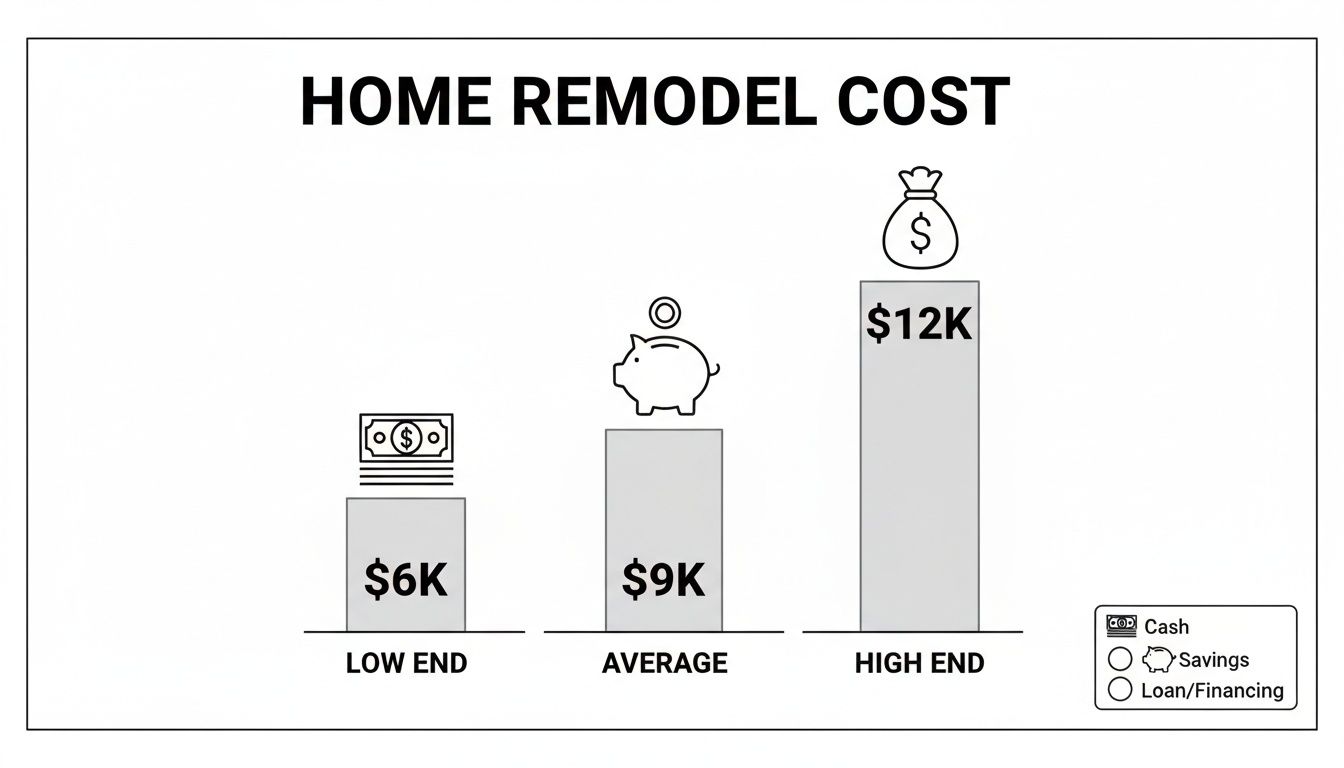
As you can see, while an "average" job lands somewhere around $9,000, the choices you make can easily pull that number down toward the lower end or push it much higher.
The Labor and Materials Split
The biggest single expense in your project is the team of pros who turn your vision into reality. It's not uncommon for labor to eat up 40-65% of the entire budget. That percentage pays for the plumber, the electrician, the tile setter, the painter, and the general contractor who keeps the whole orchestra playing in tune.
Then, of course, you have the materials. Every single choice you make here directly impacts your bottom line. For example, a perfectly good vinyl floor might only cost $2-$7 per square foot. But if you have your heart set on luxurious marble, you could be looking at $10-$20 per square foot—or even more.
Key Takeaway: Your budget is a constant balancing act between labor costs and material choices. If you want to save big on one, you'll need a solid plan and might have to make some trade-offs on the other.
Understanding this give-and-take is everything. You can't have one without the other, and smart budgeting is all about knowing how they influence each other from start to finish.
A Line-by-Line Look at Your Costs
Let's get more specific and follow the money. Even though every project is a little different, the way the budget gets divided up follows a pretty standard pattern. Knowing these common line items will help you make sense of a contractor's quote and pinpoint where you can save—or where you might want to splurge.
- Labor (40-65%): This is the big one. It covers everyone from the person managing the job down to the specialists doing the plumbing, electrical, tiling, and painting.
- Fixtures (15-20%): Think toilet, sink, faucets, and the tub or shower unit.
- Cabinetry & Vanity (10-15%): This can range from a simple, off-the-shelf vanity from a big-box store to a semi-custom piece.
- Tile & Flooring (10-15%): This includes the cost of all your floor and wall tiles, plus the grout and other installation materials.
- Lighting & Ventilation (5-7%): This covers new light fixtures, switches, and that all-important exhaust fan.
- Other (5-10%): This is a catch-all category for things like demolition, hauling away debris, pulling permits, and your contingency fund (never forget the contingency fund!).
This list really shows why a "simple" project has so many financial moving parts. A good general contractor is worth their weight in gold for coordinating this complex dance. If you're getting ready to hire, it pays to be prepared with the right questions. You can find some great pointers in this guide on what to ask a general contractor before signing anything.
Putting It All Together: A Sample Budget
To see how these percentages play out in the real world, let's build a sample budget for a mid-range $9,000 project. Seeing the actual dollar amounts makes it much easier to understand where the money is going.
Below is a table that breaks down how a typical mid-range budget gets allocated. It gives you a clear picture of both the percentage and the dollar amount for each major category.
Sample Budget Breakdown for a $9,000 Small Bathroom Remodel
| Expense Category | Percentage of Budget | Estimated Cost |
|---|---|---|
| Labor | 50% | $4,500 |
| Fixtures (Toilet, Sink, Shower) | 15% | $1,350 |
| Cabinetry & Vanity | 12% | $1,080 |
| Tile & Flooring | 12% | $1,080 |
| Lighting & Ventilation | 6% | $540 |
| Demolition & Permits | 5% | $450 |
| Total | 100% | $9,000 |
This example makes it crystal clear: a full $4,500—half the budget!—goes toward making sure everything is installed safely, correctly, and up to code. The other half is for the physical things you'll see and touch every day. This is the true cost of a quality remodel: it's an investment in both beautiful materials and expert craftsmanship.
What Your Money Actually Buys: A Look at Different Budget Tiers
It’s one thing to see the total cost of a small bathroom remodel, but it’s another thing entirely to know what that price tag gets you. Your budget is the single biggest factor shaping the final outcome. It determines everything from the tile under your feet to the faucet you’ll use every single day.
To turn those abstract numbers into something you can actually picture, let's walk through three different budget levels. Think of them as different paths for your renovation. Each one ends with a beautiful, functional bathroom, but the journey—and the finishes—will look quite different. Seeing what’s possible at each level helps you match your dreams with your wallet and plan a project that feels both exciting and doable.
The Low-Range Budget Refresh: $3,000 - $5,000
This budget is all about smart, high-impact cosmetic upgrades that don't mess with the room’s plumbing or walls. It's the perfect route for a bathroom that works just fine but is stylistically stuck in another decade. Think of it as a major facelift, not major surgery.
With a budget in this range, you’re looking for surface-level changes that pack a serious visual punch. This is where a little DIY elbow grease can make your money go a whole lot further.
What you can expect for this budget:
- A Fresh Coat of Paint: Never, ever underestimate what new paint can do. It’s the cheapest, fastest way to completely change the vibe of a room.
- New Fixtures: Swapping out that dated brass faucet, crusty showerhead, and old light fixture for modern, coordinated pieces is an instant update.
- A Pre-Fab Vanity: A new, off-the-shelf vanity from a big-box store can replace a tired old cabinet and give you much better storage.
- Durable Flooring: You can find some amazing, cost-effective options like luxury vinyl tile (LVT) or sheet vinyl that give you the look of wood or stone without the hefty price tag.
- Minor Hardware Updates: New cabinet pulls, towel bars, and a toilet paper holder are small details that make a surprisingly big difference. This is an easy DIY win.
What you're not getting here is a new layout. Moving plumbing or electrical is off the table, and you’ll be keeping the existing tub or shower.
The Mid-Range Full Remodel: $6,000 - $12,000
Now we're in the sweet spot for most homeowners. This budget range aligns with the national average and allows for a complete overhaul of the space. We’re talking about replacing just about everything, potentially right down to the studs. This is a huge leap forward in both quality and the scope of work.
Here, you’re investing in better materials and bringing in the pros for the important stuff, like tile and plumbing, to get a durable, beautifully finished bathroom. You’re most likely sticking with the original layout to keep costs in check, but you have way more freedom with your material choices.
A mid-range remodel is a true transformation. It's about gutting the old and bringing in quality, lasting materials to create a bathroom that feels entirely new, from the subfloor up to the ceiling fan.
What you can expect for this budget:
- Complete Demolition: Tearing out all the old tile, drywall, and fixtures to get a totally clean slate.
- New Bathtub or Shower: Replacing that old, dingy tub or installing a brand new shower pan and surround.
- Quality Tile Work: Using classic, tough materials like ceramic or porcelain tile for the floor and shower walls. This is where professional installation pays off.
- Upgraded Vanity and Countertop: A better-quality vanity topped with a solid surface, quartz, or a nice piece of granite.
- A Modern, Efficient Toilet: Installing a new, water-saving toilet that looks better and works better.
- Improved Lighting and Ventilation: Putting in a proper exhaust fan and much better lighting over the vanity.
This budget hits that perfect balance between a stunning aesthetic upgrade and long-term value. It creates a space you’ll be happy with for years to come.
The High-End Luxury Transformation: $15,000+
Okay, welcome to the luxury tier. A budget of $15,000 or more opens up a world of premium materials, custom work, and even major layout changes. This is where you can build that spa-like retreat you’ve been dreaming of, designed just for you.
At this level, you’re not just replacing things—you're redesigning the entire experience of being in the room. This often involves moving plumbing to fix a cramped or awkward layout, a common problem in small bathrooms. The focus shifts to high-end finishes, custom craftsmanship, and features that feel truly indulgent.
What you can expect for this budget:
- Premium Materials: Think natural stone like marble or travertine, gorgeous designer tiles, and custom-milled woods.
- Custom Cabinetry: A vanity built from scratch to perfectly fit your space and maximize every inch of storage.
- Luxury Fixtures: Designer faucets, a stunning freestanding tub, or a sleek, frameless glass walk-in shower with multiple showerheads.
- Heated Floors: Nothing says luxury like radiant floor heating on a cold morning. It’s an absolute game-changer.
- Advanced Technology: Smart mirrors with built-in lighting, integrated sound systems, or high-tech toilets with all the bells and whistles.
- Layout Changes: Finally moving that awkwardly placed toilet or shifting a wall to create a much more functional and open space.
This is the budget that lets you go after your dream features without making big compromises. The result is a small bathroom that is truly bespoke and feels incredibly luxurious.
The Hidden Factors That Can Blow Your Budget
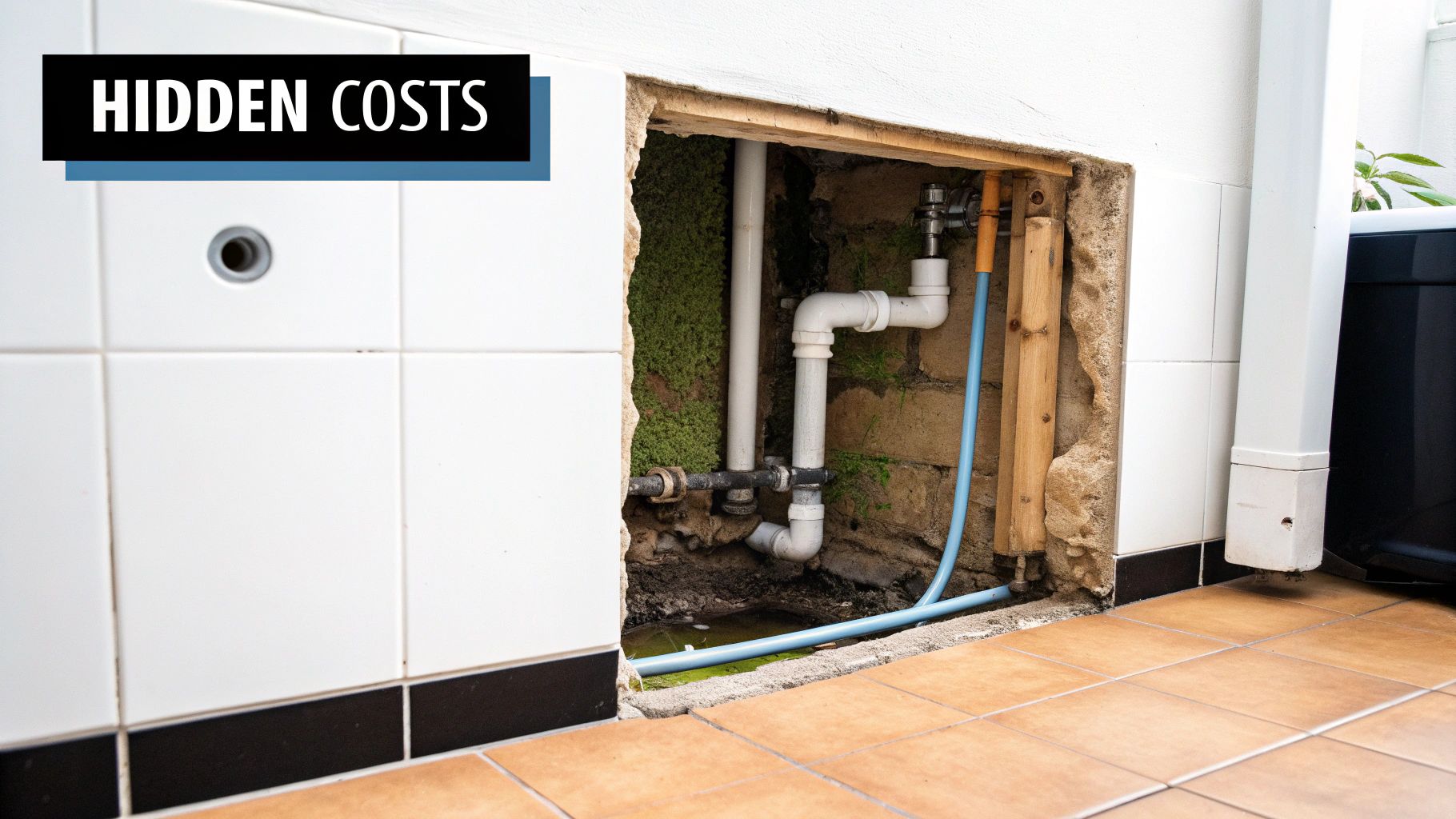
The budget you map out for tile, fixtures, and labor is really just the starting line. Think of it as the visible part of the iceberg. What you can't see—the unexpected issues lurking just beneath the surface—are the factors that can quickly inflate your final bill.
These are the variables that don’t show up on a showroom price tag but can easily tack thousands onto your project if you’re caught off guard. Knowing what they are ahead of time is like having a financial radar, helping you sidestep the sticker shock that trips up so many homeowners.
Where You Live Matters
Your zip code plays a surprisingly big role in your remodeling budget. The cost of skilled tradespeople—your plumber, electrician, and tile setter—can vary dramatically from one region to another. A contractor working in a major city with a high cost of living will naturally have higher rates than one in a quieter, more rural area.
This is exactly why those national average costs can feel so off-base. You'll see figures ranging from $3,000 to $15,000, and a huge part of that spread comes down to location. It’s always worth digging into local pricing to get a more accurate picture for your specific area.
The High Cost of Changing Layouts
Want to know one of the fastest ways to derail a bathroom budget? Start moving the plumbing around.
It seems simple enough—shifting the toilet a few feet to open up the space or moving the vanity to the opposite wall. But in the world of remodeling, this is a monumental task. It's worlds away from just swapping out an old fixture for a new one in the same spot.
Moving plumbing isn't just about connecting new pipes. It means:
- Tearing Open Walls and Floors: Your contractor will have to get invasive, cutting into drywall, tile, and maybe even the subfloor to reroute water and drain lines.
- Serious Skilled Labor: This is a job for a licensed plumber, and their time is expensive. Rerouting a home's plumbing system is complex work that can take hours, or even days.
- Possible Structural Work: Depending on what you're moving, you might even need to reinforce the floor joists to support the new location of a heavy tub or toilet.
Here's the golden rule for keeping costs in check: If you can live with your current layout, do it. Sticking to the original plumbing footprint is the single most powerful move you can make to control your budget.
Uncovering Unwelcome Surprises
The most nerve-wracking costs are the ones you can’t see—the problems hiding behind your walls. This is especially true in older homes, where years of "out of sight, out of mind" can conceal some expensive secrets. Once the demolition starts and the old tile comes down, you might be in for a nasty surprise.
Common culprits include:
- Hidden Water Damage: A tiny, persistent leak from an old pipe or cracked grout can lead to rotted subfloors, moldy wall studs, and damaged joists.
- Outdated Systems: Your home's plumbing and electrical might not meet today's building codes. Bringing them up to standard is non-negotiable and can be a hefty, unplanned expense.
- Shoddy Previous Work: You never know what you'll find. We've seen it all—from improperly supported tubs to dangerously wired outlets that absolutely must be fixed.
Finding water damage, for example, brings your project to a dead stop. You can't just cover it up; it has to be properly remediated, which adds both time and money. If you run into this, knowing how to properly fix water-damaged drywall is a crucial step.
This is precisely why every experienced contractor and savvy homeowner builds a contingency fund into their budget. Setting aside an extra 15-20% of your total project cost gives you the buffer you need to handle whatever surprises your old bathroom has waiting for you.
Practical Ways to Reduce Your Remodel Costs
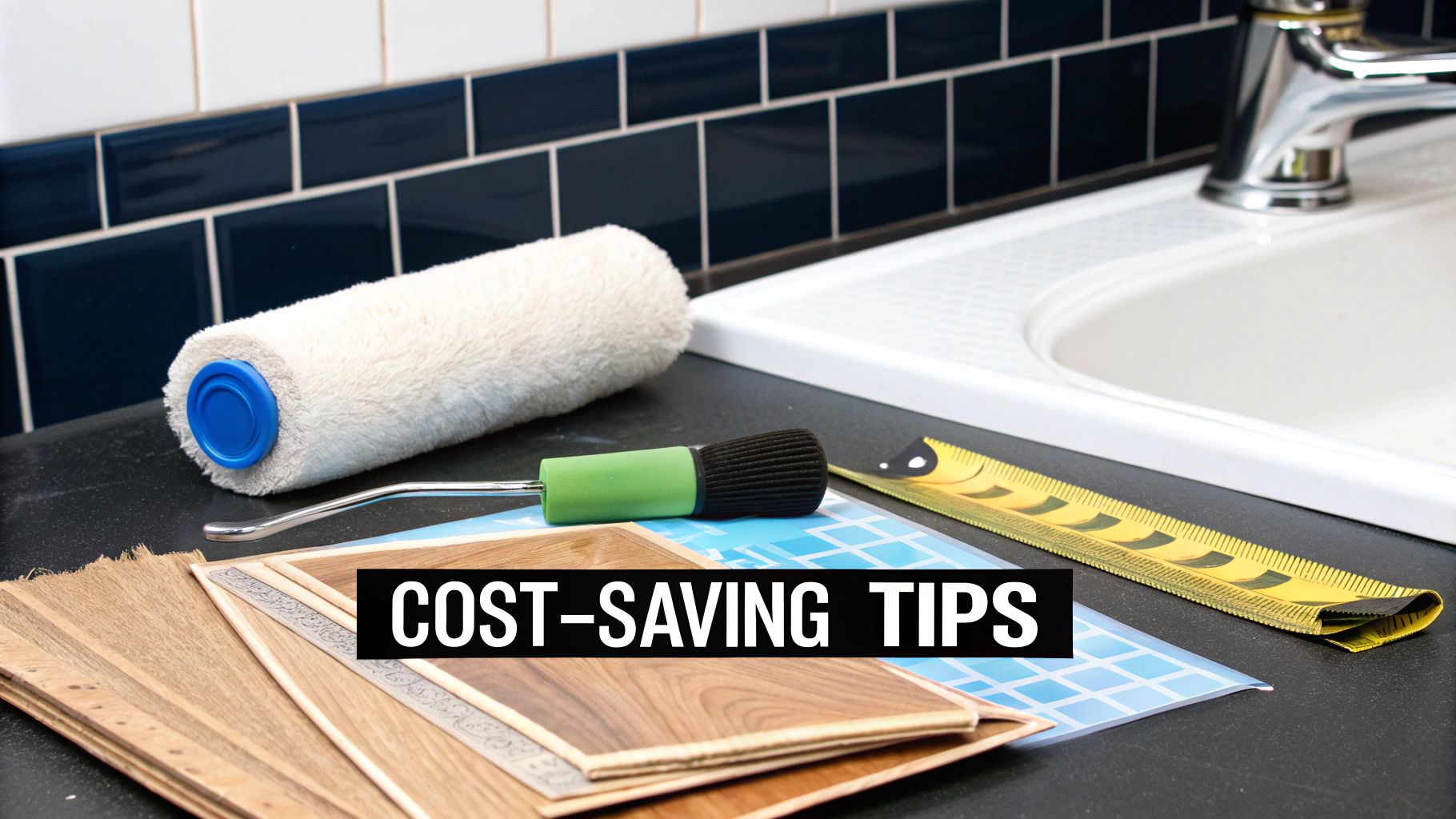
Knowing what makes a small bathroom remodel expensive is one thing. Actually doing something about it is another. Let's get into the practical, real-world strategies you can use to bring those costs back down to earth without ending up with a bathroom you don't love.
The secret isn't about being cheap; it's about being smart. You have to decide where to spend and where to save. Think of it like this: you might splurge on a fantastic, high-end tile that you've fallen in love with, but you can pair it with a more affordable, standard vanity to balance the budget. It’s all about a strategic mix.
Stick to Your Current Layout
If you take only one piece of advice, make it this one. This is, without a doubt, the single biggest money-saver in any bathroom renovation.
Keeping your toilet, sink, and shower right where they are means you don’t have to touch the expensive plumbing and drain lines hidden in your walls and floors. Reshuffling the layout might seem simple on paper, but in reality, it requires a plumber and contractor to perform major surgery on your home. That one change can easily add thousands of dollars to your bill.
Think of the existing plumbing as the foundation of your project. As long as you work with that foundation, things stay manageable. The minute you decide to move things around, you're starting a much bigger, more complex, and far more expensive job.
Choose Cost-Effective Material Lookalikes
You don't need a massive budget to get that high-end, sophisticated look. The market today is packed with amazing alternatives that deliver the aesthetic of luxury materials for a fraction of the cost.
Your secret weapon for a budget-friendly remodel is smart material selection. By choosing beautiful, high-quality alternatives, you can get the exact look you want while freeing up money for things that really count, like a top-notch tile installer or a better vanity.
Here are a few of my favorite swaps that never disappoint:
- Luxury Vinyl Tile (LVT) Instead of Stone: LVT has come a long way. You can find options that look incredibly close to real marble, slate, or travertine. The best part? It's waterproof, tough as nails, and feels much warmer on your feet than ice-cold stone.
- Engineered Quartz Instead of Marble Countertops: If you love the elegant look of marble but hate the price tag and the constant worry about stains, quartz is your answer. It's non-porous, so it won't stain and never needs to be sealed. It's a beautiful and practical choice.
- Ceramic or Porcelain Instead of Designer Tile: Don't get caught up in brand names. You can find stunning, modern, and classic designs in standard ceramic and porcelain that look just as good as their designer counterparts, often for a third of the price.
Take On a Little DIY Sweat Equity
Now, let's be clear: plumbing and electrical work are for the pros. Period. But if you're a bit handy, there are definitely a few jobs you can tackle yourself to save a nice chunk of change on labor costs.
DIY-Friendly Tasks:
- Demolition: Pulling out an old vanity, toilet, or carefully chipping away old tile can be a satisfying way to get the project rolling and cut costs right from the start.
- Painting: This is the ultimate DIY win. A fresh coat of paint has a huge impact, and it's one of the easiest jobs to do yourself.
- Installing Hardware: Swapping out old cabinet handles, towel racks, or even a faucet is a straightforward task that can instantly update the look.
For some perspective, a small 30-square-foot full bath can average $4,500-$6,000. And here's a great tip: opting for a walk-in shower instead of a new tub can often save 10-20% on the total project cost—a smart move if you already have another bathtub in the house. You can find more great breakdowns on small bathroom remodel prices and tips.
Calculating the Return on Your Bathroom Investment
A bathroom remodel isn't just another line item on a budget spreadsheet; it's a genuine investment in your home. Of course, you get the immediate satisfaction of a fresh, new space, but it’s wise to think about the long-term financial payoff, too. This is where we stop talking about cost and start talking about value.
Thinking about your remodel's return on investment (ROI) helps you see the project differently. It’s not just money out the door, but money you're putting into an asset that can grow. A smart, well-planned remodel can seriously boost your home's appeal and, ultimately, its selling price down the road.
Understanding Financial Returns
Year after year, industry reports show that bathroom updates deliver one of the best returns of any home improvement project. For a mid-range small bathroom remodel, homeowners can often expect to recoup 65-80% of what they spent when they sell their home. This strong ROI is exactly why updating a tired, old bathroom is such a good financial move, a point highlighted in many cost vs. value analyses.
So, what does that look like in real numbers? If you invest $10,000 in your project, you could see your home's value climb by $6,500 to $8,000. Potential buyers really notice clean, modern, and functional bathrooms, making your investment a major selling point.
The Value Beyond the Numbers
But the return isn't just about dollars and cents. There's another, equally important return that’s harder to quantify: your own quality of life. The true value of the project is often found in those small moments of everyday comfort and ease.
Think about the satisfaction of starting your day in a bright, organized space that just works, instead of fumbling through a cramped, dated room that adds a little bit of stress to your morning. That feeling is the "life ROI" of your investment.
This personal, intangible return shows up in a few key ways:
- Better Functionality: A layout that finally makes sense, with smart storage that gets rid of the clutter for good.
- More Comfort: Simple upgrades like great lighting or a roomier shower can completely change your daily routine for the better.
- Pride of Ownership: The simple joy of having a beautiful space you helped create.
When you get right down to it, a bathroom remodel pays you back twice—first by boosting your home's financial worth, and second by making your daily life just that much better.
Common Questions About Small Bathroom Remodels
Thinking through the costs of a small bathroom remodel always kicks up a lot of questions. Getting straight answers is the best way to plan your project with confidence and sidestep the usual headaches. Let's tackle some of the most common things homeowners ask, from how long it all takes to the biggest money mistakes you can make.
Knowing what to expect before the first hammer swings makes all the difference.
How Long Does a Small Bathroom Remodel Take?
Every job has its own quirks, but you can generally expect a standard small bathroom remodel to take anywhere from two to four weeks. That timeline covers the whole process, from demolition day to the final wipe-down.
This schedule gives your crew enough time to tear out the old stuff, handle any plumbing and electrical work, and then carefully install all the new fixtures, tile, and finishes. The biggest things that stretch this timeline? Waiting on a custom vanity to arrive or discovering some nasty surprises (like water damage) hiding behind the walls.
The most common delay in a remodel isn't the work itself, but waiting for a specific vanity or tile to arrive. Ordering all your materials before demolition begins is the best way to keep your project on track and avoid costly downtime for your crew.
Is It Cheaper to Replace a Tub with a Walk-In Shower?
In many cases, yes. Swapping an old bathtub for a new walk-in shower can often be the more wallet-friendly move, potentially saving you 10-20% on that specific part of the job. A good quality pre-fabricated shower stall usually costs less than a brand new tub and the labor to tile the entire surround.
Of course, that price tag can climb fast if you're dreaming of custom tile work, a fancy frameless glass door, or have to move plumbing lines around. Still, it's a great way to modernize the space and improve accessibility, especially if you have another bathtub elsewhere in the house.
What Is the Biggest Budgeting Mistake to Avoid?
The single biggest mistake I see homeowners make is failing to set aside a contingency fund. It doesn't matter how meticulously you plan; remodels are famous for revealing surprises. You might pull up the old floor and find rotted wood, or open a wall and discover ancient wiring that's no longer up to code.
You have to plan for the unexpected. Building this buffer into your budget is what protects your project and your sanity.
- Set aside 15-20% of your total estimated project cost. This is the professional standard.
- Keep this fund separate. It’s not for upgrading your faucet at the last minute.
- Think of this as your insurance policy against the "uh-oh" moments that could otherwise stop your renovation in its tracks.
Without that safety net, you'll be forced to make tough cuts on your design or, worse, leave the project half-finished. A contingency fund is what ensures you can handle whatever comes up and still get the beautiful bathroom you planned for from the start.
Ready to transform your small bathroom without the stress? Garner Construction & Maintenance offers expert craftsmanship and transparent communication to bring your vision to life, on time and on budget. Plan your perfect remodel with a team you can trust by visiting us at https://www.garnercandm.com.