

Before you even think about picking out paint swatches or dreaming of waterfall countertops, you need to get real about the numbers. The most important tool for any home renovation isn't a hammer or a drill—it's a solid, well-researched budget.
A good budget is more than just a spreadsheet for tracking receipts. It’s your project’s North Star. It keeps you honest, sets realistic expectations from day one, and prevents that all-too-common feeling of financial panic mid-project. Diving into a remodel without a budget is like setting off on a cross-country road trip with no map and a half-tank of gas. You'll definitely have an adventure, but you probably won't end up where you wanted.
Start with the Scope: Needs vs. Wants
First things first, let's get your vision out of your head and onto paper. The best way I've found to do this is with a simple "Must-Haves" versus "Nice-to-Haves" list. This isn't just busywork; it's a critical exercise that brings clarity to the chaos.
-
Must-Haves: These are the absolute non-negotiables. If you're redoing the kitchen, this list probably includes new, energy-efficient appliances, functional cabinets that actually close properly, and flooring that can handle daily life. This is the core of your project.
-
Nice-to-Haves: Here's where you put the dream items—the gorgeous tile backsplash you saw online, that fancy pot-filler faucet, or custom pull-out pantry shelves. These are the things you’d love to have if the numbers work out.
This simple two-column list is your secret weapon against scope creep. When a surprise cost pops up (and it will), you’ll have a clear framework for deciding what to cut without sacrificing the entire goal of the renovation.
Digging for Real-World Costs
Generic online cost estimators can give you a vague idea, but they don't know the price of lumber in your town or the going rate for a good plumber. To build a budget that holds up in the real world, you have to do some local legwork.
Start with materials. Go to a few local suppliers or check out their websites to price out the big-ticket items. Find out what flooring costs per square foot, how much a linear foot of countertop will run you, and the price range for the appliances you're considering.
Labor is the real wild card. It’s often the single largest line item in a renovation budget. As a general rule of thumb, expect labor to account for 30% to 50% of your total project cost. The best way to nail this down is to talk to people. Call a few local, reputable contractors and ask for a high-level estimate. Most will do this for free. This step alone will give you a much more accurate picture and ground your budget in reality.
A renovation is a huge investment, and you're not the only one planning one. The global home improvement market was valued at $931.6 billion and is projected to hit $1.4 trillion by 2035. Here in the U.S., homeowners spend $509 billion annually, and 72% of us are planning some kind of work soon. Learn more about the scale of the home improvement market and its trends.
This early research transforms your wishlist into an actual number. Once you have that preliminary figure, you can build out a detailed budget worksheet. For a structured guide to keep you on track, check out our complete home renovation checklist. Think of it as your financial command center for the entire project.
From Ballpark Guess to a Real-World Budget
That first estimate is a great starting point, but a truly successful renovation hinges on a much more detailed, line-item budget. This is where you graduate from a big-picture idea to a granular plan that accounts for every last screw, tile, and hour of labor.
Your plan has to dig deeper than just the obvious stuff like cabinets and flooring. You need to think about demolition, hauling away the debris, pulling permits, and even that final deep clean. It’s these small-ticket items that add up fast and trip up a lot of homeowners.
Why You Absolutely Need a Contingency Fund
I've been on enough job sites to know that home improvement projects are notorious for surprises. That’s why a contingency fund isn't just a "nice to have"—it's non-negotiable. Think of it as your project's financial shock absorber.
A good rule of thumb is to set aside 15% to 20% of your total estimated cost for this fund. If you’re working on an older home, I’d strongly recommend leaning toward that 20% figure. You just never know what you'll find behind a wall—outdated wiring, a slow leak, or unexpected structural issues are all common discoveries.
Just remember, this fund is strictly for true surprises. For example, your contractor opens up a wall and finds termite damage that has to be fixed. That's a classic contingency expense. Deciding mid-project you'd rather have those pricier quartz countertops? That's an upgrade, and it should come from a different pocket.
The single biggest difference between a stressful renovation and a smooth one is a healthy contingency fund. It’s the buffer that lets you solve problems without derailing your timeline or gutting your original vision.
To ground your numbers in reality, it helps to see what others are spending. You can learn more about the average cost of home remodels and get a feel for current market rates.
Don't Forget the "Hidden" Costs
Beyond the construction itself, a handful of other expenses always seem to catch people off guard. A realistic budget anticipates these details so they don’t eat into your emergency fund before you’ve even started.
Be sure to factor these common "hidden" costs into your plan:
- Permit Fees: Depending on where you live and what you’re doing, building permits can run anywhere from a few hundred to well over a thousand dollars.
- Temporary Living Expenses: If your kitchen or only bathroom is out of commission for a few weeks, the cost of takeout or even a short-term rental can add up.
- Utility Bill Spikes: Power tools, new appliances, and extra people in the house will almost certainly lead to a temporary jump in your electricity and water bills.
- Post-Construction Cleaning: Once the dust literally settles, hiring a professional crew for a deep clean is often money well spent.
- Waste Disposal: You’ll likely need to rent a dumpster for all the demolition debris, which is a standard project expense.
This chart lays out the core steps for building a solid budget, moving from initial research to the final numbers.
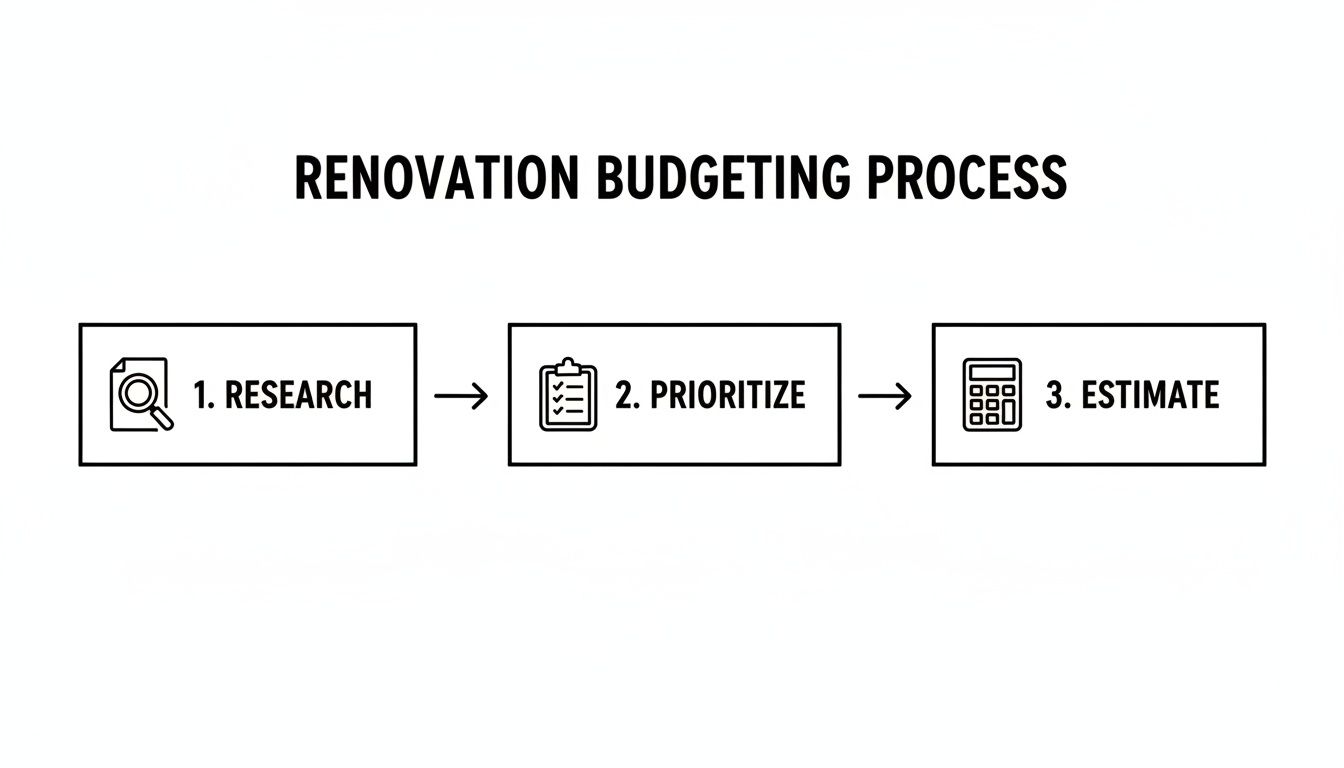
As you can see, a reliable budget isn't just pulled out of thin air. It's built on a foundation of solid research and smart priorities. Following this process helps you create a financial plan that can handle the realities of a real-world renovation.
How to Prioritize for Maximum Renovation ROI
Every dollar you spend on a home improvement project should pull its weight, not just for your home's long-term equity, but for your quality of life right now. The real secret to smart budgeting for home improvements is learning how to prioritize. It's all about finding that sweet spot where what you want for your family meets what the market actually values.
A trendy home office or a custom wine cellar sounds great, but when you look at the data year after year, it's the kitchens and bathrooms that are the real heavy hitters for return on investment (ROI). These are the functional hearts of a home, and buyers everywhere appreciate updates in these spaces. But remember, ROI isn't just about what you get back at resale—it's also about your "return on enjoyment."
Balancing Personal Wants with Market Value
The key is to strike a balance between what you truly want and what adds tangible value. The first question to ask yourself is: how long are you planning to stay?
If you see a "For Sale" sign in your yard within the next two to three years, your choices should definitely lean toward projects with a proven track record for resale value. On the other hand, if this is your forever home, that "return on happiness" starts to carry a lot more weight. That spa-like primary bathroom might not recoup 80% of its cost, but the daily comfort it brings you for the next ten years? That could be priceless.
Your home is more than just a financial asset; it's where you live your life. The best renovation budget honors both sides of this coin—investing in projects that boost equity while genuinely improving your day-to-day experience.
This balanced approach keeps you from just chasing numbers and helps you create a space that truly works for you and your family.
Needs Always Come Before Wants
Before you even think about picking out new countertops, you have to address the bones of your house. This is easily the least glamorous part of renovating, but it’s the most critical.
A leaky roof, a dying HVAC system, or an ancient electrical panel has to take priority over cosmetic upgrades, every single time. Ignoring these essential repairs is like building a beautiful house on a crumbling foundation. It doesn't just risk much more expensive damage down the road; it can completely derail a fun project midway through. Just imagine tearing out your kitchen only to discover a plumbing leak that eats up your entire contingency fund and then some.
Here’s a simple way I tell my clients to think about it:
- Needs: Anything that protects your home’s structural integrity, safety, and core systems. Think roofing, plumbing, electrical, and foundation work.
- Wants: The fun stuff. Upgrades that boost aesthetics, comfort, or convenience, like new fixtures, paint colors, or high-end appliances.
Your budget should always fully fund all the "needs" first—including setting aside that contingency fund—before you allocate a single dollar to the "wants" list.
Identifying High-Impact Projects
Even when your priorities are straight, you still have to make tough choices. Recent data shows that despite a shaky economy, U.S. homeowners are still investing heavily, with spending hitting a staggering $513 billion in the first quarter alone. With 72% of homeowners planning projects, you need to know where to put your money for the biggest bang.
You can get a better sense of where the market is heading by reviewing the latest home improvement spending trends, but exterior replacements and kitchen remodels are evergreen choices because they both protect and enhance your home's core value.
Focus on projects that give you the most visual and functional impact for the cost. From my experience, minor kitchen and bath remodels often give you a much better pound-for-pound return than a complete gut job. For instance, refacing your cabinets instead of replacing them, swapping out old hardware, and installing new countertops can completely transform a space for a fraction of the cost of a full overhaul.
Never underestimate the power of a fresh coat of paint and updated lighting—these are low-cost changes with a massive visual payoff.
To help you decide where to focus your budget, I've put together a table based on years of industry data. It breaks down some of the most common projects and what you can realistically expect to get back when you sell.
Home Improvement Projects Ranked by ROI
| Project Type | Average National Cost | Average ROI (Cost Recouped) | Best For... |
|---|---|---|---|
| Garage Door Replacement | $4,302 | 102.7% | Boosting curb appeal and home security on a budget. |
| Manufactured Stone Veneer | $10,925 | 102.3% | Adding dramatic, high-end texture to your home's exterior. |
| Minor Kitchen Remodel | $28,279 | 71.2% | A quick refresh to modernize the heart of the home without a full gut. |
| Window Replacement (Vinyl) | $20,482 | 67.5% | Improving energy efficiency and updating your home's look. |
| Bathroom Remodel (Midrange) | $27,164 | 60.1% | Upgrading a high-traffic space for both personal enjoyment and resale. |
| Roofing Replacement (Asphalt) | $31,535 | 59.6% | Addressing a critical "need" that protects your entire home. |
Source: Remodeling Magazine's 2023 Cost vs. Value Report
As you can see, the projects with the highest ROI are often the practical ones that enhance curb appeal and functionality. While a major remodel can be a fantastic personal investment, these smaller, high-impact projects often make the most sense from a purely financial perspective.
Decoding Contractor Bids to Protect Your Budget

You can have the most carefully planned budget in the world, but it's only as reliable as the team you hire to bring your project to life. Honestly, picking the right contractor is probably the single most important decision you'll make during this entire process. And it all starts with understanding their bids.
Let's get one thing straight: never, ever go with the first contractor you talk to. The golden rule is to get at least three detailed bids for any project of significant size. This isn't just about hunting for the lowest price. It’s about getting a realistic baseline for what the work should cost and, just as importantly, spotting any potential red flags early on.
Looking Beyond the Bottom Line
When you have three different proposals sitting in front of you, it's easy to feel a bit overwhelmed, especially if the prices are all over the map. That shockingly low bid might feel like you've won the lottery, but I can tell you from experience, it’s often a sign of trouble. It could mean the contractor is cutting corners, using cheap materials, or—and this is a big one—planning to hit you with a bunch of expensive "surprises" down the road.
On the flip side, an extremely high bid might just mean that contractor is too busy or simply not the right fit for your project's scope. The sweet spot is often somewhere in the middle. But the price tag is just one piece of the puzzle.
To really compare bids effectively, you have to make sure you're comparing apples to apples. A professional bid is so much more than a single number scribbled on a piece of paper. It should be a detailed, itemized breakdown.
A solid bid should always include:
- A Detailed Scope of Work: It should clearly list every single task, from demolition and framing to plumbing, electrical work, and the final coat of paint.
- Material Allowances: It needs to specify the types and quality of materials included. Think brand of windows, grade of lumber, or the price-per-square-foot allowance for your tile.
- Labor Costs: This breaks down how much you're paying the skilled tradespeople who will be in your home every day.
- Permit Fees: The contractor should handle pulling permits and include the estimated cost.
- A Project Timeline: A true professional will give you an estimated start date and a target for completion.
A vague, one-page estimate is a massive red flag. If a contractor can't be bothered to create a detailed bid, it's a good sign they won't put the necessary effort into managing your project, either. Transparency from day one is non-negotiable.
The Contract Is Your Shield
Once you’ve made your choice, that detailed bid gets formalized into a contract. This legal document is your ultimate protection—don’t treat it lightly. Read every single line, and if something isn’t crystal clear, ask for an explanation before you even think about signing.
Here are a few key clauses to look for:
- Payment Schedule: Payments should be tied to specific, completed milestones. For example, 10% on signing, 30% after demolition, 30% after drywall is up, and the final 30% only when the project is 100% complete and you're satisfied. Never agree to pay a huge amount upfront.
- Change Order Process: Let's be real, changes happen. A good contract outlines a formal process for any adjustments. It should require a written "change order" signed by both you and the contractor that details the new work and any added costs. This little step prevents verbal agreements from blowing up your budget.
- Lien Waivers: This is absolutely critical. A lien waiver is a document from your contractor and their subcontractors stating they've been paid for their work. Securing these waivers at each payment stage protects you from having a lien placed on your property if the general contractor doesn't pay their suppliers or crew.
Arming yourself with the right knowledge is your best defense. For more help, check out our list of questions to ask a general contractor to vet potential partners thoroughly. Remember, a great relationship with your contractor is built on clear communication and a rock-solid contract, which ensures both your budget and your vision are respected from start to finish.
Funding Your Project and Managing Costs in Real Time

You've done the hard work of creating a solid budget and finding a contractor you trust. Now comes the moment of truth: securing the money and keeping it under control as the project unfolds. Getting the funds is just one part of the equation; tracking every dollar in real time is what separates a smooth renovation from a stressful, over-budget nightmare.
Figuring out the best way to pay for it all can feel like a maze, but it really boils down to matching the right financing tool to your project's size and your own financial comfort zone.
Choosing Your Financing Strategy
For smaller projects that fall under the $10,000 mark—think swapping out a few windows or giving a powder room a facelift—cash is king. Paying out of pocket is clean, simple, and keeps you from taking on new debt. It also provides a built-in brake against scope creep, which is always a bonus.
But when you’re talking about a full kitchen gut or adding a bathroom, financing becomes a much more realistic path. Here are the most common routes homeowners take:
- Home Equity Line of Credit (HELOC): This is a revolving line of credit that’s secured by your home. Think of it like a credit card for your renovation—you draw money as you need it and only pay interest on what you use. That flexibility is a huge advantage for long projects where big expenses are staggered over months.
- Home Equity Loan (HELOAN): If you prefer predictability, a home equity loan might be a better fit. You get a single lump-sum payment with a fixed interest rate and a clear repayment schedule. This is perfect when you have a firm, final quote from your contractor and want your monthly payments to be set in stone.
- Personal Loan: Don't have a ton of equity built up yet? A personal loan can bridge the gap. Because it’s an unsecured loan, the interest rates are usually higher, but the approval process can be much quicker. It's a solid option for time-sensitive repairs or projects you can't put off.
Securing your financing early on lets you lock in the material and labor costs of today. In a world where renovation expenses seem to climb every year, waiting six months to save up could mean paying significantly more for the exact same project.
Real-Time Expense Tracking Is Non-Negotiable
Once the dust starts flying, your budget spreadsheet officially graduates from a planning tool to a command center. This is where the real discipline comes in. Meticulous, daily tracking is the only way to avoid the budget bloat that derails so many renovations.
Your system doesn't have to be fancy. A simple spreadsheet will do the trick. Just make sure you have columns for the budget category, the amount you planned to spend, the actual cost, who you paid, and when. The secret ingredient here is consistency. Log every receipt and approve every invoice the moment it happens.
This isn’t just about bookkeeping; it’s about maintaining control. By checking your spending against your project's progress every week, you can catch problems before they spiral. See that your plumbing costs are already 10% over budget? Now you can pivot, maybe by choosing a more affordable tile for the backsplash to offset the difference.
Managing Payments and Change Orders
Your contract should spell out a clear payment schedule tied to tangible milestones—for example, "payment due upon completion of drywall," not "payment due on the 15th." Never, ever hand over a large check until you’ve walked through the work for that phase and confirmed it meets your standards.
And then there are the changes. No renovation is immune to them. The key is to handle them formally with a change order process. A casual "sure, go ahead" to a contractor's suggestion can have surprisingly expensive consequences. Always insist that any change from the original plan—adding a task, swapping a material—is documented in writing. This change order should detail the new work, the exact cost, and any impact it will have on your final completion date.
This simple process protects both you and your contractor, keeping everything transparent and heading off the kind of arguments that sour projects and wreck budgets. It's this active, hands-on financial management that truly brings a well-planned renovation home.
Still Have Questions About Your Renovation Budget?
Even with a detailed plan in hand, a few questions always seem to pop up. That’s perfectly normal. Managing the finances for a big project has a lot of moving parts, so let's walk through some of the most common things homeowners ask me about.
How Much Do I Really Need in a Contingency Fund?
Think of your contingency fund as the ultimate "just in case" money. It's your project's safety net. The rule of thumb in the industry is to set aside 15% to 20% of your total estimated project cost. This isn't just a number we pull out of thin air; it’s a realistic buffer that comes from decades of seeing what can, and often does, go wrong.
If you have an older home, I always push my clients to aim for that 20% mark. You just never know what you'll find behind a wall—old wiring that isn't up to code, a slow leak that caused hidden rot, you name it. It's much more common in older builds. And be disciplined here: this money is not for deciding you want fancier countertops halfway through. It's strictly for the true, unforeseen problems that could otherwise bring everything to a halt.
A healthy contingency fund is what separates a manageable hiccup from a full-blown budget crisis. It's the best tool you have to keep your project moving and your stress levels in check when a surprise pops up.
What’s the Best Way to Track All This Spending?
Honestly, the best method is whichever one you’ll actually stick with. For most people, a simple spreadsheet does the trick beautifully. Just create columns for the category (like "Plumbing"), your budgeted amount, the actual cost, who you paid, and when.
The tool itself isn't what matters—it's the habit. You have to be religious about updating it right after you approve an invoice or make a payment. If you're more tech-savvy, an app like Mint or the contractor-focused Houzz Pro can link to your bank accounts and automate some of the work. No matter what you choose, get in the habit of reviewing your spending against your budget every single week. It's the only way to spot a potential overage before it becomes a real problem.
Can I Save Money by Doing Some Work Myself?
Absolutely! Getting your hands dirty can be a great way to make your budget go further, but you have to be brutally honest about your skills and how much time you really have. Some jobs are perfect for a motivated homeowner.
Where you can genuinely save money:
- Demo Day: Tearing out old cabinets, ripping up flooring, or taking down a non-structural wall is hard work, but it can save you a bundle on labor.
- Painting: Nothing transforms a space like a fresh coat of paint, and it’s a job most people can learn to do well.
- Landscaping: Basic yard cleanup, planting, and mulching are fantastic ways to contribute some sweat equity and boost curb appeal.
Now for the reality check: leave the specialized trades to the pros. I'm talking about electrical, plumbing, and anything structural. A small mistake in one of those areas isn't just dangerous; the cost to fix it will almost certainly be more than what you would have paid a licensed professional in the first place.
My Contractor Wants to Go Over Budget. What Do I Do?
This is where your signed contract becomes your best friend. If a contractor brings up a change that will add to the cost, the very first thing you do is ask them for a formal "change order." This isn't being difficult; it's just good business and standard practice for any professional.
The change order is a written document that must spell out three things:
- A detailed description of the new work.
- The exact cost of this change, broken down by materials and labor.
- How this change will affect the project's timeline.
Never, ever agree to a price hike based on a verbal chat. Once you have the written change order, you can make a clear-headed decision. Is this a necessary fix for something unexpected? Great, that's what your contingency fund is for. Is it an optional upgrade or a "wouldn't it be nice if..." idea? You have every right to say no. A good contractor will always respect this process because it protects both of you.
Planning and pulling off a home renovation is a huge undertaking, but you don't have to figure it all out on your own. At Garner Construction & Maintenance, we build our projects on a foundation of clear communication and transparent budgeting. Contact us today for a straightforward consultation and let's build your dream space together.