

A successful budget-friendly kitchen remodel isn't about sacrifice; it's about being strategic. The goal is to focus on high-impact, low-cost upgrades—think painting cabinets and updating hardware—to get that fresh, functional space you're dreaming of, without the sticker shock of a full gut job. It’s all about making smart choices to stretch every single dollar.
Your Roadmap to a Smart, Affordable Kitchen Remodel
The thought of a kitchen remodel often conjures up images of sky-high bills and months of chaos. But I'm here to tell you that a beautiful, functional kitchen is well within your reach. This guide is your roadmap to a successful remodel, focusing on strategic moves that deliver the most bang for your buck, both visually and practically. We're not talking about cutting corners; this is about investing wisely to create a kitchen you’ll love for years.
So many homeowners feel trapped, thinking a major overhaul costing tens of thousands is their only option. That's just not true. With a bit of thoughtful planning, you can fix most of those common kitchen "pain points"—like dated finishes, poor lighting, or clunky storage—without breaking the bank. The key is to pinpoint exactly what isn't working for you and target your funds there.
What a Smart Budget Can Really Do
A well-planned, budget-friendly kitchen remodel can completely change the feel and function of your home. It’s about making deliberate decisions that genuinely improve your daily life and even add a nice little boost to your property value.
Here’s what you can actually accomplish with this approach:
- Set a rock-solid budget: We'll break down where the money really goes so you can put it towards what matters most to you.
- Zero in on high-impact upgrades: You’ll learn to focus on changes that provide the biggest visual return, like a fresh coat of paint, new countertops, or modern hardware.
- Choose materials like a pro: Discover how to pick affordable yet durable materials that give you a high-end look for less.
- Find the right balance between DIY and hiring help: Figure out which tasks you can confidently tackle yourself to save a bundle and when calling in a professional is a non-negotiable for safety and quality.
One of the biggest mistakes I see is homeowners thinking they have to tear everything out. Honestly, some of the most dramatic transformations I've witnessed came from working with the existing footprint. Painting cabinets or keeping the layout the same saves a fortune on plumbing and electrical work.
By the time you're done with this guide, you’ll have a playbook filled with actionable advice and insider tips. You'll be ready to turn that dream kitchen into an affordable reality, proving once and for all that a stunning kitchen doesn't have to come with a staggering price tag. Let's get started.
Establishing Your Remodel Budget And Scope
Before you start pinning countertop samples, let's talk about the most crucial part of any budget-friendly kitchen remodel: the money. Jumping into a renovation without a solid financial plan is a recipe for stress and overspending. Getting clear on what things really cost will help you make smart, strategic choices from the get-go.
The first step is understanding where your dollars will actually go. In almost every kitchen project, a few key areas eat up the lion's share of the budget. Knowing this helps you see where a small saving can make a huge impact.
Where The Money Really Goes
In my experience, the single biggest line item is almost always the cabinetry. It’s not unusual for new cabinets and their installation to devour 30% to 40% of your total budget. That one expense often sets the ceiling for everything else.
After cabinets, the next biggest chunks are usually appliances, countertops, and labor—each typically taking up between 10% to 20%. Things like flooring, lighting, and plumbing fixtures fill in the rest. When you see it broken down like this, you realize how saving a bit on a big-ticket item like cabinets can free up serious cash for other priorities.
This visual gives a great overview of how to balance the core elements of a budget-conscious remodel.
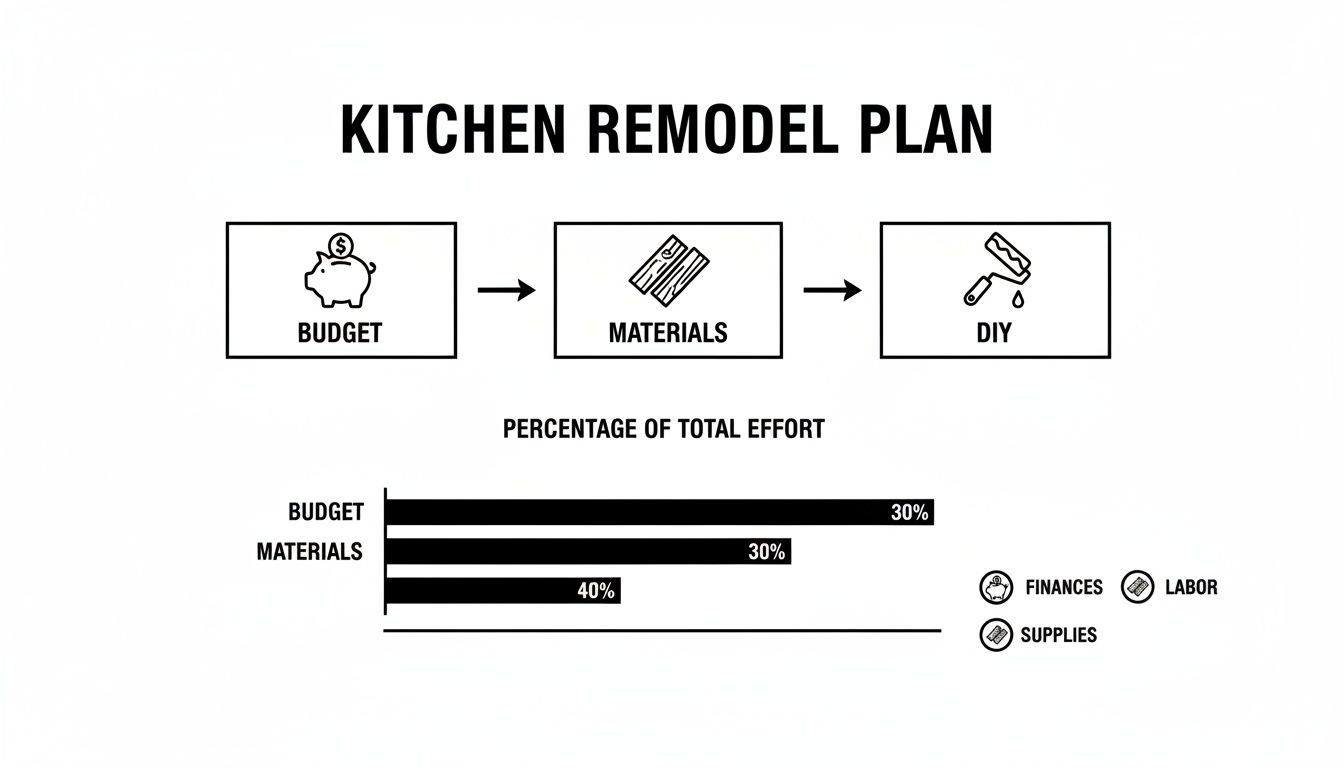
As the graphic shows, a successful project really is a juggling act between careful budgeting, smart material choices, and knowing when to roll up your sleeves and DIY.
Setting A Realistic Budget Tier
"Budget-friendly" means something different to everyone. The scope of your project will come down to what you're comfortable spending.
- Under $15,000 (The Cosmetic Refresh): This is your high-impact, low-cost zone. We're talking about painting your existing cabinets, swapping out the hardware, maybe putting in a new laminate countertop, and adding a DIY backsplash. You'll keep your current layout and major appliances, but the transformation can be stunning.
- $15,000 - $30,000 (The Minor Remodel): In this range, things get more interesting. You can start looking at new ready-to-assemble (RTA) cabinets, a budget-friendly appliance suite, durable luxury vinyl plank flooring, and updated lighting. This is an incredibly popular sweet spot for homeowners who want a major change without the eye-watering cost of a full gut job.
Here’s a quick look at how the numbers might shake out in that mid-range sweet spot. This isn't set in stone, of course, but it gives you a realistic starting point for your own planning.
Sample Budget Breakdown for a $20,000 Kitchen Remodel
| Expense Category | Percentage of Budget | Estimated Cost |
|---|---|---|
| Cabinetry | 35% | $7,000 |
| Appliances | 15% | $3,000 |
| Countertops | 15% | $3,000 |
| Labor | 15% | $3,000 |
| Flooring | 5% | $1,000 |
| Backsplash & Paint | 5% | $1,000 |
| Lighting & Fixtures | 5% | $1,000 |
| Miscellaneous | 5% | $1,000 |
Seeing the numbers laid out like this makes it easier to understand the trade-offs. For example, opting for more affordable cabinetry might let you upgrade your appliances or countertops.
Prioritizing Your Wants Versus Needs
With a budget number in mind, it's time for some honest self-reflection. This is where you separate your "must-haves" from your "nice-to-haves." The best way to start is by listing every single thing you dislike about your current kitchen.
Is it the lack of counter space for meal prep? The ancient dishwasher? The terrible lighting? Your "needs" list should directly solve these functional problems. Your "wants" are the fun extras—a specific faucet brand, that wine fridge you've been dreaming of, or custom pantry pull-outs.
Pro Tip: Your budget should always tackle the "needs" first. Once those are covered, you can see what's left for the "wants." This disciplined approach is the secret to staying on track and ending up with a kitchen that not only looks great but truly works better for your family.
The All-Important Contingency Fund
Here's a piece of advice I give every single client: no remodel goes exactly as planned. You will encounter surprises. When you pull out old cabinets, you might find hidden water damage or discover old wiring that isn't up to code. This is exactly what a contingency fund is for.
Plan on setting aside an extra 10% to 15% of your total budget for these curveballs. So, for a $20,000 project, that's $2,000 to $3,000 you don't touch. Think of it as your project's insurance policy, not a slush fund for upgrades. It’s what keeps a small headache, like needing to fix water-damaged drywall, from turning into a full-blown financial crisis.
And if you make it to the end without using it? Fantastic. Now you can splurge on something from that "wants" list.
Choosing Materials And Layouts That Save You Money
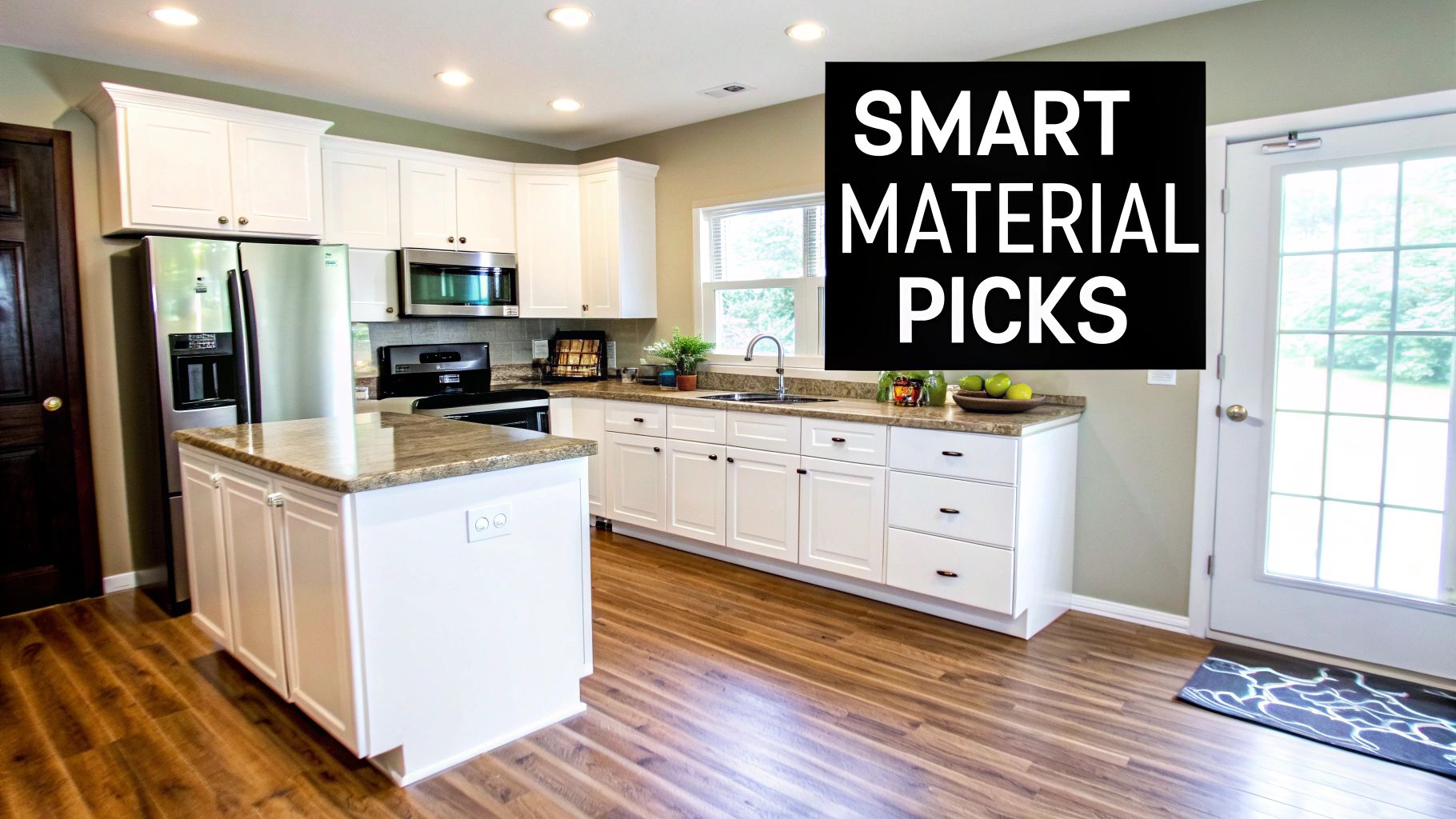
Once you have a budget hammered out, it's time for the fun part: making smart choices on materials and design that make every single dollar count. This is where a strategic eye really pays off, because the most effective way to manage costs in a budget-friendly kitchen remodel is to work with the bones of what you already have.
The single biggest money-saving decision you can make? Keep your existing kitchen layout. I can't stress this enough. Moving plumbing, gas lines, and electrical outlets is a fast way to drain your funds before you've even picked out a backsplash.
Sticking with your current footprint frees up a huge chunk of your budget for the cosmetic changes that deliver that "wow" factor. Industry experts estimate that leaving plumbing and electrical in place can slash your total renovation bill by a whopping 20-30%. Since new cabinets are usually the biggest expense—eating up 30–40% of the budget—this one decision lets you focus on finding affordable ways to make a big visual impact. It’s a smart move for any homeowner, but especially valuable for landlords looking to boost a rental property's appeal and value.
Give Your Existing Cabinets a Facelift
Since brand-new cabinets are the priciest item on the list, breathing new life into your current ones is a total game-changer. If your cabinet boxes are in decent shape, you have some fantastic, affordable options that can completely transform your space.
- A Fresh Coat of Paint: Never underestimate the power of paint. With a little elbow grease—proper sanding, priming, and using high-quality cabinet paint—you can achieve a professional-looking finish. This update alone can make a dated kitchen feel brand new for just a few hundred bucks.
- Cabinet Refacing: This is a brilliant middle ground. You keep the cabinet boxes but replace the doors and drawer fronts, then apply a new veneer to the exterior. You get the look of brand-new cabinetry for about half the cost.
- New Hardware: Think of it as jewelry for your kitchen. Swapping old, clunky knobs and pulls for modern hardware is an easy DIY project that adds instant personality and style for minimal cost.
I’ve seen homeowners save thousands by simply painting their solid wood cabinets and adding modern brass hardware. The result is a high-end, custom look that costs less than a single new appliance. It’s the ultimate budget-friendly move.
If your cabinets are truly beyond repair, don't jump straight to expensive custom options. Stock cabinets from big-box stores or Ready-to-Assemble (RTA) cabinets ordered online offer stylish, durable solutions at a fraction of the price. RTA cabinets save you a ton on labor costs if you're willing to assemble them yourself.
Smart Swaps for Countertops and Flooring
Everyone loves the look of marble or granite, but they come with a serious price tag. Luckily, the market is packed with impressive alternatives that give you that luxury feel for less. Even better, many of these options are more durable and easier to take care of.
A top contender for a budget-friendly kitchen remodel is laminate countertops. Forget the laminate of the 70s; modern versions come in a huge variety of patterns that do an amazing job of mimicking stone, wood, and quartz. They're tough, stain-resistant, and one of the most affordable choices out there.
Another great material is butcher block. It brings a natural warmth and character to a kitchen that stone just can't match, and it's significantly cheaper. It does require some light maintenance (like regular oiling), but its charm and low cost make it an incredibly popular pick.
When it comes to the floor, Luxury Vinyl Plank (LVP) is the undisputed champion. Here’s why:
- It realistically imitates the look of hardwood, tile, or even stone.
- It’s 100% waterproof, which is a massive plus for a kitchen.
- It's durable, comfortable to stand on, and straightforward for a confident DIYer to install.
Finding Deals on Appliances
Appliances can devour a budget in a hurry, but you don't need professional-grade models for a beautiful, functional kitchen. The key is to shop smart. Always keep an eye out for major holiday sales events like Black Friday, Memorial Day, or Labor Day, when retailers roll out deep discounts.
Also, look for appliance packages where you buy several pieces from the same brand. Retailers often knock 10-20% off the total price for bundling a fridge, range, dishwasher, and microwave together.
Don't forget to check out local appliance outlets or scratch-and-dent stores. They sell new appliances with minor cosmetic flaws—often on the sides or back where you'll never see them—for a fraction of the retail price. It’s a fantastic way to snag high-quality brands without the sticker shock. And finally, be honest with yourself: if an appliance works fine, do you really need to replace it? Keeping your functional, existing appliances is the ultimate way to save.
DIY Or Hire A Pro? Making The Smart Call

This is one of the biggest questions in any budget-friendly kitchen remodel: when should you roll up your sleeves, and when is it time to call in an expert? Getting this right can save you a ton of money and a world of stress. The wrong choice, however, can lead to botched jobs, safety issues, and expensive fixes.
The secret isn't about doing everything yourself. It's about knowing where your skills, time, and tools can make the biggest impact. Most successful budget remodels I’ve seen take a hybrid approach—you tackle the cosmetic stuff and leave the high-risk jobs to the pros. This keeps your labor costs down while ensuring the critical parts are done right.
Let's break down which jobs are perfect for a weekend warrior and which ones demand a professional touch.
High-Impact DIY Tasks to Save Money
If you've got some patience and a willingness to watch a few tutorial videos, there are plenty of high-impact projects you can handle yourself. These tasks usually have a low barrier to entry and can save you a significant chunk of change, considering labor can easily eat up 15-20% of your total budget.
Here's where you can really cut costs:
- Painting Everything: This is the undisputed champion of budget updates. A fresh coat of paint on the walls, trim, or even the cabinets can completely transform your kitchen for the cost of a few supplies.
- Installing a Simple Backsplash: You don't need to be a master tiler. Modern peel-and-stick options look amazing, and even a classic subway tile backsplash is surprisingly manageable for a first-timer with the right tools.
- Assembling RTA Cabinets: Ordering Ready-to-Assemble (RTA) cabinets is a popular cost-saving move. Putting the boxes together yourself is straightforward and slashes labor costs. You might still want a pro to hang them perfectly, but the assembly is all you.
- Swapping Hardware and Fixtures: This is one of the easiest, fastest upgrades. If you can use a screwdriver, you can install new cabinet pulls. The same goes for replacing a faucet or a light fixture, provided the underlying plumbing and wiring are staying put.
My two cents: Learning a new skill, like how to properly prep and paint cabinets, can save you thousands. The key is to be brutally honest about your skill level and never rush. A professional-looking finish is all in the details.
When To Absolutely Hire A Professional
For all the money you can save with DIY, some jobs are just not worth the risk. Trying to tackle these without the right training isn't just a gamble—it's downright dangerous. It can lead to failed inspections, voided insurance, and repair bills that dwarf what you would have paid a pro in the first place.
Do not attempt these jobs yourself. Period.
- All Electrical Work: Moving outlets, adding under-cabinet lighting, or running a new circuit for an appliance is a job for a licensed electrician. Faulty wiring is a massive fire hazard.
- Plumbing and Gas Lines: Any time you're moving the location of a sink, dishwasher, or gas stove, you need a licensed plumber. Even a tiny, slow leak behind a wall can cause catastrophic water damage and mold.
- Structural Changes: Thinking about taking out a wall for that open-concept feel? You must bring in a structural engineer and a qualified contractor. Guessing whether a wall is load-bearing is a recipe for disaster.
- Complex Countertop Installation: Materials like granite, quartz, or even butcher block require precise templating, specialized cutting tools, and a lot of muscle to install correctly. A professional ensures a perfect, seamless fit.
Here is a quick reference to help you decide which route to take for common remodel tasks.
DIY vs Pro Task Comparison
| Task | Best for DIY If... | Hire a Pro When... | Potential Savings |
|---|---|---|---|
| Painting | You're patient and good with prep work (sanding, taping). | You have very high ceilings, complex trim, or want a flawless cabinet finish. | $500 - $2,000+ |
| Backsplash Tiling | It's a simple, flat area and you're using easy materials like peel-and-stick or subway tile. | The design is complex, the walls are uneven, or you're using natural stone. | $400 - $1,200 |
| Cabinet Installation | You are assembling RTA cabinets and have a helper for lifting and leveling. | You need custom cabinets, the layout is changing, or your walls/floors are uneven. | $1,500 - $4,000+ |
| Flooring | You're installing click-lock laminate or vinyl plank over a level subfloor. | You're installing hardwood, porcelain tile, or the subfloor needs extensive repair. | $800 - $2,500 |
| Plumbing | You're simply swapping a faucet or hooking up a garbage disposal to existing lines. | You are moving the sink/dishwasher location or replacing drain/supply lines in the wall. | $300 - $1,500+ |
| Electrical | You're just changing out a light fixture or replacing an outlet cover. | You need to move outlets, add circuits, or install any new wiring. | $250 - $1,000+ (Priceless for safety!) |
Ultimately, hiring a professional for the big stuff isn't just another line item on your budget—it's an investment in your home's safety, function, and long-term value. When you do decide to hire out, make sure you're prepared. Knowing the right questions to ask a general contractor will help you find a trustworthy partner who can get the job done right and respect your budget.
Maximizing Your Remodel's Return On Investment
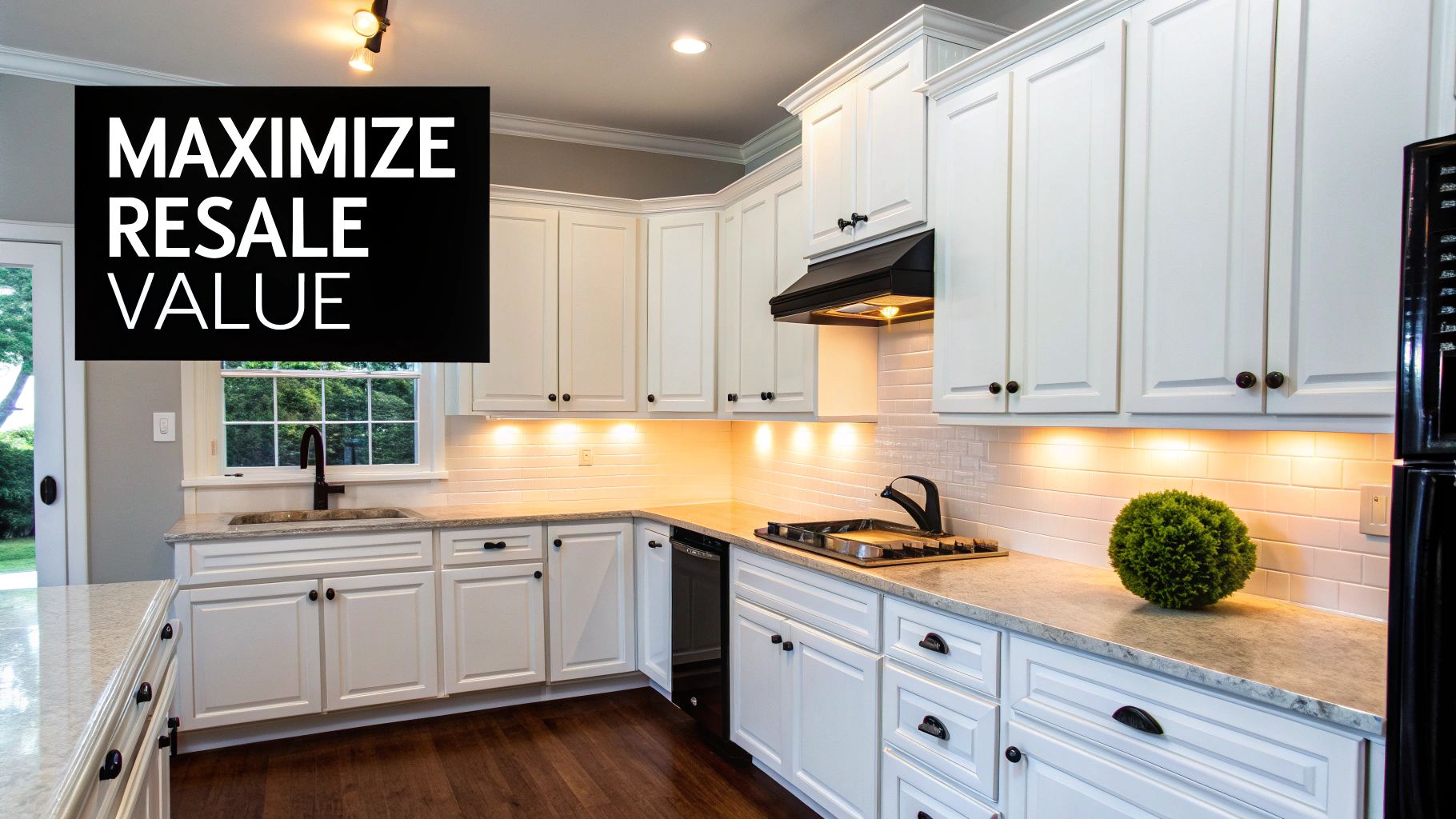
A kitchen remodel isn't just an upgrade for your enjoyment—it's a serious investment in your property. When you're trying to make every dollar count, each decision needs to pull double duty. It should make your life better and deliver a solid return on investment (ROI) down the road.
The secret is to focus on changes that have a broad, timeless appeal. You want to create a space that will catch the eye of future buyers, even if selling isn't on your radar right now. Think like they would. Loud, hyper-personal choices can be fun, but they rarely pay off at resale. The smartest money is always on clean, classic, and universally loved designs that make a kitchen feel bright, functional, and meticulously cared for.
Embrace Timeless Design Trends
To get the most bang for your buck, you have to sidestep fleeting trends. The goal is a kitchen that looks just as good in ten years as it does the day you finish. That's how your investment gains lasting power and appeals to the widest pool of potential buyers.
Here are a few classic choices that consistently deliver value:
- Neutral Color Palettes: You can’t go wrong with whites, soft grays, or warm beiges. These colors make any kitchen feel bigger and brighter, serving as a perfect blank canvas for a new owner's style.
- Shaker-Style Cabinets: There’s a reason this clean, simple cabinet style has been popular for over a century. It fits beautifully into modern, traditional, and transitional designs, making it a stylish and incredibly safe bet.
- Durable, Low-Maintenance Countertops: While exotic stone is gorgeous, today’s high-quality laminates and entry-level quartz patterns offer a similar look with far better durability at a fraction of the cost. Buyers love seeing countertops that are built to last and don't require special care.
A common mistake I see homeowners make is falling for bold, specific finishes that are too personal. A timeless, neutral kitchen is powerful because it allows potential buyers to easily envision themselves and their lives in that space. That's what gets a house sold. Stick to the classics for the best return.
The Power of Great Lighting
Never, ever underestimate what good lighting can do. A dark, shadowy kitchen feels small, drab, and uninviting, no matter how much you spent on the finishes. Carving out even a small part of your budget for lighting can make the entire room feel more spacious and expensive.
A layered lighting plan is what you're after. This means having a mix of ambient (overall), task (focused), and accent lighting.
- Under-Cabinet LEDs: This is a non-negotiable for a modern kitchen. It’s a relatively low-cost upgrade that makes meal prep easier while creating a high-end, warm ambiance.
- Updated Main Fixtures: Get rid of that old, dated ceiling light. Swapping it for a modern semi-flush mount or a few recessed lights will instantly change the feel of the room.
- Pendant Lights: If you have an island or peninsula, adding one or two stylish pendants creates a beautiful focal point and injects some personality.
Good lighting is a hallmark of a quality renovation. It's one of those details you'll want to get right, so it’s worth reviewing a professional construction quality control checklist to ensure the electrical work and every other element meets the proper standard.
High ROI Upgrades That Pay Off
Year after year, data shows that kitchen remodels offer one of the best returns of any home improvement project. Even minor, cosmetic updates can recoup a huge portion of their cost when it’s time to sell.
For projects in the $15,000–$30,000 range, homeowners can often recoup 70% or more of their investment. The ROI is strongest when you make practical choices: think durable laminate countertops, reliable mid-range appliances, and a smart lighting plan that can make a space feel 20% larger.
Ultimately, a budget-friendly kitchen remodel is a game of strategy. By focusing on timeless design, functional improvements, and quality work, you’ll end up with a space you absolutely love living in—while making a very wise financial move for your future.
Common Questions on Budget-Friendly Kitchen Remodels
Even the most buttoned-up plan runs into questions. Let's tackle some of the most common things homeowners ask when they're trying to get the most out of their kitchen remodel budget. I'll give you the straight answers to help you move forward with confidence.
What Is the Absolute Cheapest Way to Remodel a Kitchen?
Hands down, the most affordable way to get a new-look kitchen is to focus entirely on cosmetic updates without touching the layout. The moment you start moving plumbing or electrical, costs skyrocket. Keeping your existing footprint is the biggest money-saver, period.
Your strategy should be all about high-impact, surface-level changes. Think about painting or refacing your existing cabinets instead of tearing them out. Pair that with an updated laminate countertop and some fresh, new hardware.
A new coat of paint on the walls and a simple backsplash you can install yourself—like peel-and-stick tiles—can completely change the feel of the room. If your appliances are in good working order, keeping them will also save you thousands. This approach gives you a dramatic visual transformation for just a fraction of what a full gut job would cost.
How Much Should I Realistically Budget for a Small Kitchen Remodel?
For a minor refresh on a small kitchen (usually under 150 square feet), you're typically looking at a range between $7,500 and $25,000. Where you fall in that spectrum really comes down to your material choices and how much of the work you're ready to roll up your sleeves and do yourself.
- The lower end ($7,500 - $12,000): This budget is perfect for cosmetic work. We're talking painting cabinets and walls, putting in a new laminate countertop, and updating fixtures on your own.
- The higher end ($12,000 - $25,000): Here, you have more room for bigger changes. This could include new stock or RTA cabinets, a modest appliance package, and quality flooring like luxury vinyl plank.
One thing I always tell clients: no matter the budget, you need a contingency fund. Set aside an extra 10-15% for the unexpected. You might pull up old floors and find water damage, or open a wall and discover old wiring. That buffer is your project's insurance policy.
Think of it this way—it's not for splurging, it's what keeps a small hiccup from derailing your entire project.
Which Kitchen Upgrades Actually Add the Most Value?
When you're thinking about return on investment (ROI), the smartest upgrades are the ones that improve function while having a broad, classic appeal. Minor kitchen remodels are consistently one of the best performers, with homeowners often recouping 60% to 80% of what they spent when they sell.
The upgrades that really move the needle are the ones that make a kitchen feel clean, modern, and bright.
- Refreshed Cabinets: You can't go wrong with a timeless style like Shaker cabinets. Whether you paint your old ones, reface them, or install new ones, it's a massive selling point.
- Updated Countertops: Getting rid of dated countertops for a durable, neutral option like an entry-level quartz or a sharp-looking modern laminate makes a huge impact.
- Energy-Efficient Appliances: A matching set of modern, energy-efficient appliances tells potential buyers that the home has been well cared for.
- Better Lighting: A well-lit kitchen just feels bigger and more inviting. Layering your lighting with a mix of recessed cans, a nice pendant, and under-cabinet LEDs is a relatively low-cost upgrade that feels high-end.
Ultimately, a bright, clean, and functional kitchen is one of the most powerful assets your home can have.
Can I Really Remodel My Kitchen for Under $10,000?
Yes, it's absolutely possible to pull off a kitchen remodel for under $10,000. But it demands some serious discipline, smart shopping for materials, and a whole lot of your own sweat equity. This isn't a project you can outsource; your own labor is what generates the savings.
To keep it under that $10,000 mark, you have to stick to a few ground rules. First, keeping your existing layout is non-negotiable—moving utilities would eat up most of your budget in one go. Second, you’ll have to work with your existing major appliances, assuming they’re still chugging along just fine.
Your money will go toward high-impact cosmetic jobs. This means painting your existing cabinets and walls, installing an affordable laminate countertop, and putting in a simple backsplash yourself. New flooring, like vinyl sheet or plank, and updated light fixtures can also fit into the plan. There’s very little room here for hiring pros, so your success really hinges on your willingness and ability to tackle the work yourself. It's a challenge, for sure, but an incredibly rewarding way to get a new kitchen on a tight budget.
A successful kitchen remodel starts with a solid plan and the right partner. If you're ready to transform your space with a team that values craftsmanship and clear communication, Garner Construction & Maintenance is here to help. Visit our website to see our work and schedule your consultation today.