

If you’re looking for the short answer, here it is: the best all-around flooring for most rental properties is Luxury Vinyl Plank (LVP). It delivers a winning combination of durability, water resistance, and cost-effectiveness that’s tough to beat. LVP gives you the high-end look of hardwood or stone that tenants love, but it’s built to withstand the reality of frequent turnover and heavy foot traffic.
Understanding Your Flooring Investment Strategy
Choosing flooring for a rental isn't about your personal style; it's a calculated business decision. When you're picking finishes for your own home, you can splurge on what you love. For a rental, the goal is maximizing your return on investment (ROI) by striking the perfect balance between upfront cost, long-term durability, and tenant appeal.
The right flooring choice means fewer maintenance calls, less frequent replacements between tenants, and a property that attracts and keeps good renters. It's a foundational part of a low-stress, profitable rental business.
This guide goes beyond the usual advice to give you a detailed breakdown of the top flooring options on the market. We'll be looking at each material through the lens of a property owner, focusing on what truly matters:
- Durability and Lifespan: How well does it handle scratches, dings, and constant traffic?
- Maintenance and Repair: How simple is it to clean, and what will repairs cost you in time and money?
- Water Resistance: Can it survive the inevitable spills in a kitchen, bathroom, or even a basement?
- Tenant Appeal and ROI: Does it make the property look more valuable and help you get it rented quickly?
The Rise of Resilient Flooring
The global flooring market has seen explosive growth, with "resilient" options like Luxury Vinyl Tile (LVT) leading the charge, especially in the rental space. The industry is projected to grow from USD 463.13 billion in 2026 to USD 646.7 billion by 2034. Why the boom? Materials like LVT are engineered to resist the scratches, stains, and water damage that are a constant headache with other types of flooring. If you want to dig into the numbers, this comprehensive market analysis from Fortune Business Insights explains the trends driving landlord decisions.
For a landlord, the ideal flooring is a silent partner—one that looks great, performs reliably, and rarely demands attention or money. The goal is to install it and forget it for as long as possible.
Before we jump into a head-to-head comparison, it’s important to have a clear framework for making your choice. In the sections that follow, we'll give you the criteria to evaluate each option logically. We’ll line up the top contenders side-by-side, so you can walk away feeling confident you’ve picked the perfect flooring for your specific rental scenario.
Key Criteria For Evaluating Rental Flooring
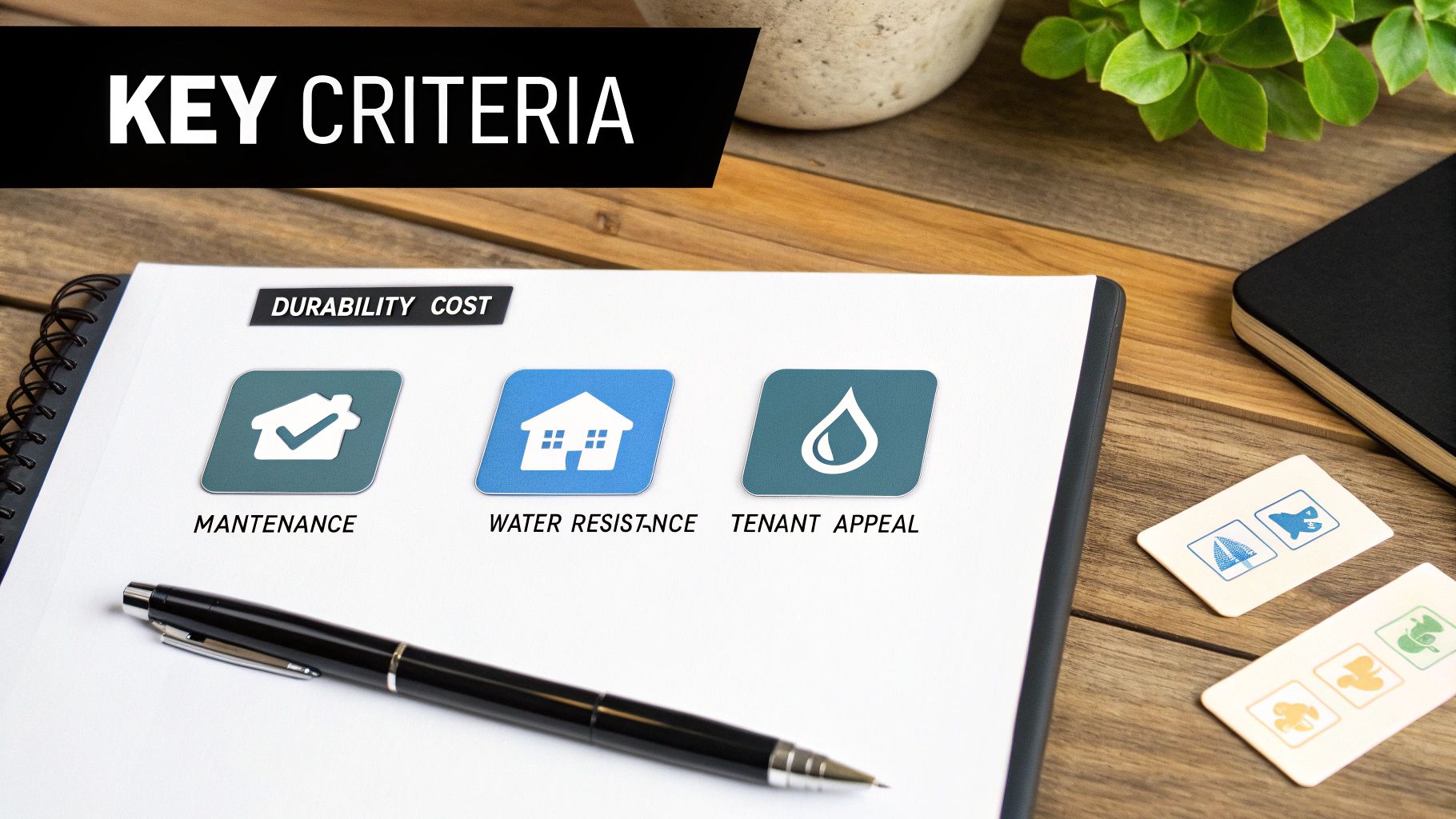
When you're choosing flooring for a rental, you have to think like a business owner, not just a homeowner. Forget the latest design trends for a moment. The best choice comes down to a strategic assessment of what will save you money and headaches in the long run.
Before you even start looking at samples, it’s crucial to have a clear framework for your decision. Every property is different, so how you weigh these factors will depend on your specific rental, your target tenants, and your local market. By running every option through these five critical checks, you'll land on a floor that truly works for your investment.
Durability And Lifespan
In the world of rentals, durability isn't just about fending off a few scratches. It's about how well the floor holds up to the reality of tenant life: constant move-ins and move-outs, dragged furniture, pets, and the occasional bit of neglect. A truly durable floor means less work for you between tenants.
Think about the long game. A cheaper floor might seem like a win today, but if you're replacing it every three years, you're losing money. A slightly higher upfront cost for a material that lasts a decade or more is almost always the smarter financial move. Your goal is to find flooring that can look great through multiple lease cycles.
Installation Cost And Complexity
Remember that the sticker price per square foot is only part of the equation. Installation costs can easily double your budget, and a complex job can mean a longer vacancy—and lost rent.
Options like click-lock vinyl planks are famous for being DIY-friendly, which can save you a bundle on labor. But be honest about your skill level, because a botched installation will cost you more down the road. If you're hiring out, make sure you know the right questions to ask a general contractor to get the job done right the first time.
Maintenance And Repair
This one is a deal-breaker. You need flooring that’s dead simple for your tenants to clean and incredibly hard for them to ruin. Materials that laugh off spills and don't need fancy, specialized cleaners are your best friends.
The ideal rental flooring is both tenant-proof and easy to patch. Look for materials where you can replace a single damaged plank or tile without having to tear up the whole room.
Repairability is just as critical. When a tenant drops something heavy, can you fix that one spot? Modular flooring like LVP or tile is a clear winner here. Swapping out a single damaged piece is a quick, cheap fix compared to replacing an entire floor.
Water Resistance
Water is the natural enemy of any property, and spills, leaks, and plumbing mishaps are a matter of when, not if. You want flooring that is genuinely waterproof, not just "water-resistant." This is especially true for kitchens, bathrooms, laundry rooms, and basements.
A waterproof barrier stops moisture from ever reaching the subfloor, which is your first line of defense against rot, structural damage, and mold. This single feature can protect you from some of the most catastrophic and expensive repairs a landlord can face.
Tenant Appeal And ROI
At the end of the day, your flooring has to help you rent the property. While you’re focused on durability, your prospective tenants are looking at aesthetics. A dated, worn-out floor can be an instant turn-off.
The right flooring choice makes your entire rental feel cleaner, more modern, and more valuable. It helps you attract better tenants, fill vacancies faster, and command a higher rent. That perfect balance between cost, longevity, and tenant appeal is what defines your true return on investment (ROI).
Comparing The Top Rental Flooring Options
Alright, now that we have a solid framework for what to look for, let's put the main contenders under the microscope. For most landlords I talk to, the choice almost always comes down to three heavy hitters: Luxury Vinyl Plank (LVP), Ceramic or Porcelain Tile, and Laminate.
Each of these has its place, and a smart investor knows when to use which. We're going to break down how each one stacks up against our five key criteria—durability, cost, maintenance, water resistance, and tenant appeal. This will help you see past the marketing claims and make a decision based on real-world performance and long-term ROI.
Luxury Vinyl Plank: The All-Around Champion
There’s a good reason Luxury Vinyl Plank, or LVP, has become the darling of the rental world. It just hits that sweet spot, offering an almost perfect blend of durability, looks, and cost-effectiveness that can handle the rigors of tenant life.
Modern LVP isn't your grandma's old sheet vinyl. It’s a high-tech product built in layers: a tough-as-nails core, usually a Stone Polymer Composite (SPC) or Wood Plastic Composite (WPC), a super realistic image layer that looks like wood or stone, and a clear protective wear layer on top. This sandwich construction is what gives it such impressive performance.
From a tenant's perspective, LVP is a home run. They get the warm, high-end look of hardwood they love, but you don't get the maintenance headaches that come with it. The imaging technology is so good now that you practically have to get on your hands and knees to tell it's not real wood.
Key Differentiator: The absolute game-changer for landlords is that LVP is 100% waterproof. I don't mean water-resistant; I mean completely impervious to water. This makes it the safest bet for kitchens, bathrooms, and basements where spills, leaks, and pet accidents are bound to happen.
When you're shopping for LVP, the most important spec to look at is the wear layer. For a rental, don't even consider anything less than 12 mil (one-thousandth of an inch). If you can spring for 20 mil or more, do it, especially for high-traffic units. It’s your best defense against scratches from furniture, pet claws, and anything a tenant might drop.
Ceramic And Porcelain Tile: The Durability Powerhouse
When you need something that can truly take a beating and last forever, nothing tops tile. For decades, ceramic and porcelain have been the undisputed kings of high-moisture, high-traffic zones like bathrooms, kitchens, and entryways. Their rock-solid nature makes them virtually immune to scratches, dents, and water damage.
Porcelain is a step up from standard ceramic—it's denser and less porous, making it even tougher and more water-resistant. It's the perfect choice for the most demanding environments. A well-installed tile floor can easily last 30-50 years, often outliving multiple tenant turnovers and even your ownership of the property.
This longevity isn’t just an opinion; the market backs it up. Tile has always been a go-to for wet areas, and with the global flooring market projected to hit USD 634.8 billion by 2033, the demand for bulletproof materials like tile is as strong as ever. For a landlord, choosing tile in a bathroom can cut the risk of needing to replace the floor due to water damage by over 60% compared to other options. You can read more about these flooring market trends from Grand View Research.
But tile isn't without its downsides. Installation is a big one—it's slow, messy, and expensive, often costing more for labor than the tiles themselves. It’s also cold and hard underfoot, which tenants might not appreciate in bedrooms or main living areas.
And then there's the grout. The tiles themselves are a breeze to clean, but grout lines are porous and will eventually stain. They require sealing or a deep cleaning every few years to keep them from looking grimy, adding another maintenance item to your to-do list.
Laminate: The Budget-Friendly Contender
Laminate was one of the first wood-look alternatives to hit the market, and it’s still a popular choice for landlords looking to save a few bucks. It's made from a high-density fiberboard (HDF) core with a photo-realistic image layer on top and a clear, protective coating. This construction holds up surprisingly well against scratches and won't fade in the sun.
You can find laminate in a huge variety of styles, and it offers a crisp, clean look. Installation is also a major plus. Most laminate uses a click-lock system that's easy for pros and manageable for a DIY-savvy landlord, which helps keep labor costs in check.
The big catch with laminate, however, is its mortal enemy: water. That fiberboard core acts like a sponge. A simple spill that isn't cleaned up right away can cause the planks to swell, bubble, and peel. The damage is permanent.
Critical Weakness: You'll see a lot of laminate marketed as "water-resistant," but be careful. This usually just means it can handle a quick surface spill. Any standing water, pet accidents, or moisture seeping up from the subfloor can ruin it in a hurry, making it a gamble for kitchens, bathrooms, or basements.
Because of this Achilles' heel, laminate is really only suitable for dry areas like bedrooms, closets, and living rooms. It can be a smart way to stretch your budget in the right places, but stay far away from any room with plumbing. No matter what flooring you choose, making sure it’s installed correctly is crucial; referencing a construction quality control checklist can help ensure a professional result.
Rental Flooring Comparison Matrix
To simplify things, here’s a quick-reference table that boils down the key differences between our top three contenders. It's designed to help you see the trade-offs at a glance.
| Flooring Type | Average Cost (per sq ft) | Durability Rating (1-5) | Water Resistance | Best For |
|---|---|---|---|---|
| Luxury Vinyl Plank (LVP) | $3 - $7 | 5/5 | Waterproof | The entire unit, especially kitchens & baths |
| Ceramic/Porcelain Tile | $8 - $15 | 5/5 | Waterproof | Kitchens, bathrooms, and entryways |
| Laminate | $2 - $6 | 4/5 | Water-Resistant | Bedrooms, living rooms, and hallways |
As you can see, LVP really shines as the most versatile, high-value option for almost any situation. Tile is the undisputed king of durability for wet areas but comes with a higher price tag and lower comfort level. Laminate offers the lowest upfront cost but carries a significant water-damage risk that limits where you can safely install it. Understanding these nuances is key to choosing the right flooring for your rentals and protecting your investment for years to come.
Taking a Look at Niche Flooring for Rentals
While luxury vinyl plank, tile, and laminate are the undisputed workhorses in most rental portfolios, some properties just demand something different. You’ll run into situations that justify stepping away from the usual suspects, either to meet the expectations of a high-end market or to solve a unique structural problem.
This is where options like engineered hardwood, carpet, and even polished concrete come into play. They aren't your everyday choices for every unit, that's for sure. But when you use them strategically, they can give you a serious edge. The trick is knowing when they're a smart investment versus an unnecessary risk.
Engineered Hardwood for Premium Properties
For your average rental, solid hardwood is a tough sell. The cost is high, and it’s famously unforgiving with moisture. Engineered hardwood, on the other hand, strikes a fantastic balance for high-end properties where tenants expect more and the rent can justify the splurge.
It’s built with a thin layer of real hardwood on top of a super-stable plywood or fiberboard core. This gives you the genuine look and feel of real wood without its classic diva behavior. This construction makes it far more resistant to humidity swings than solid wood, which means you can install it in places you'd never put its solid cousin, like directly over concrete slabs.
In a luxury downtown condo or an executive single-family rental, engineered hardwood might be the very feature that gets the lease signed. It just gives off a sense of quality and permanence that LVP, for all its practical brilliance, can't fully replicate.
Think of engineered hardwood as a calculated investment in your property's brand. It signals a premium experience and often attracts a more discerning, responsible tenant who might just stick around longer, cutting down your turnover costs.
You have to be realistic, though. Even with a tough factory finish, that real wood veneer can still get deep scratches and dents. Fixing it is a lot more involved than swapping out a vinyl plank, and you can only refinish it once or twice—if you're lucky and the veneer is thick enough. This is a floor best reserved for properties where the potential for a big rent premium outweighs the bigger maintenance headache.
Finding the Right Place for Carpet
Carpet has definitely lost its top spot in the rental world, mostly because it’s a magnet for stains and smells. But don't count it out completely. It still has a valuable, budget-friendly role to play in specific areas, especially in the bedrooms of properties where you have low tenant turnover.
The main draws for carpet are simple: comfort and cost. It’s warm, soft underfoot, and does a great job of dampening sound—all things tenants love in a bedroom. Plus, basic builder-grade carpet is one of the cheapest floors you can put in, which is a big win when you're trying to keep renovation costs down.
As a landlord, the secret is to use it surgically and accept its short lifespan.
- Bedrooms Only: Keep carpet confined to bedrooms to protect it from the heavy traffic and spills of main living areas.
- Smart Color Choices: Stick with mid-tone neutrals like a good gray or beige. They do a better job of hiding dirt and appeal to nearly everyone.
- Plan for Replacement: Just assume you’ll be replacing it every 3-5 years, or basically after every other tenant. Go ahead and build that cost into your long-term budget from day one.
Carpet becomes a real liability in living rooms, dining rooms, or any unit that allows pets. In those spots, the cleaning bills and replacement costs will eat up any initial savings in no time.
Polished Concrete: Modern and Tough as Nails
For a very specific kind of rental—think ground-floor apartments, basement units, or lofts with that industrial-chic vibe—polished concrete is an unbelievably durable and stylish choice. It takes an existing concrete slab and turns it into a sleek, high-gloss floor that is practically bulletproof.
The process involves grinding the concrete smooth and then treating it with a chemical densifier and sealer. What you get is a floor that shrugs off scratches, stains, and water, making it one of the absolute lowest-maintenance options out there. No grout lines to scrub, no planks to pull up.
This floor is a perfect fit for:
- Ground-Floor or Basement Units: Properties that already have a concrete subfloor are the most logical and affordable candidates.
- Modern or Industrial Lofts: The look is a natural match for minimalist or urban design, which attracts a very specific type of renter.
- Live-Work Spaces: Its sheer durability is ideal for mixed-use spaces that see a ton of foot traffic.
While polished concrete wins on durability, its hard, cold surface can be a negative for some tenants. This is easy enough to solve with area rugs, but it's something to keep in mind. It's a bold look that really defines a space, making it a fantastic tool for the right property but a poor choice for a traditional family home.
Putting It All Together: Flooring For Real-World Rentals
Okay, we've broken down the specs and stats, but theory only gets you so far. The real challenge is picking the right floor for a specific property. Let's walk through four common rental scenarios I see all the time.
Each one has its own set of demands, and matching the right material to the environment is where you save yourself headaches and money down the road. This is about making smart, proactive decisions that protect your investment and keep tenants happy.
The High-Traffic Family Rental With Pets
This is the ultimate stress test for any floor. You've got constant foot traffic, kids dropping everything imaginable, pet claws, and the never-ending parade of spills. The flooring here has to be a tank—tough, waterproof, and ridiculously easy to clean.
Top Recommendation: Luxury Vinyl Plank (LVP)
Honestly, LVP is the MVP for family and pet-friendly rentals. Its multi-layer build, especially with a rigid Stone Polymer Composite (SPC) core, makes it incredibly tough against dents and scratches. I tell every landlord in this situation the same thing: a wear layer of 20 mil or higher is non-negotiable. It’s what keeps the floor looking great through multiple tenancies. And, of course, being 100% waterproof means you won’t be dealing with costly subfloor repairs after a few pet accidents.
The Budget-Conscious Student Housing Unit
For student housing or your first entry-level rental, it's all about balancing the upfront cost with decent resilience. You need something that looks clean and modern to attract applicants but won't drain your bank account, especially since you can expect higher turnover and more wear and tear.
Top Recommendation: Laminate Flooring
This is where laminate really shines. It gives you that popular hardwood look for a lot less money, and its topcoat is surprisingly tough against scratches. The laminate market has boomed for a reason, with the North American residential sector growing to USD 18.4 billion by 2021, driven largely by remodels just like this. Landlords are also catching on that tenants prefer hard surfaces—carpet can lead to 40% more allergen-related complaints. You can read more about these North American residential flooring trends. Just be smart about it: keep laminate in dry areas like bedrooms and living rooms to avoid its biggest enemy—water.
Landlord Insight: For budget-focused properties, you need a floor that shows well and can handle normal use without a huge investment. Laminate hits that sweet spot perfectly, offering a modern look that helps get units rented fast.
The Moisture-Prone Basement Apartment
Basements are the high-risk zone for flooring, plain and simple. You're dealing with potential humidity, condensation, appliance leaks, or even minor flooding. In this environment, putting down any material with a wood or fiber core is just asking for trouble.
Top Recommendation: Ceramic or Porcelain Tile
When moisture is a constant threat, tile is the only option that lets you sleep at night. Both ceramic and porcelain are completely impervious to water. They will never swell, warp, or grow mold if they’re installed correctly. What you get is a permanent, bulletproof surface that can handle pretty much anything. If a pipe does leak, you can fix the water problem without having to tear out and replace the entire floor. If you find yourself in that situation, our guide on how to fix water-damaged drywall can help you tackle the related repairs.
The Luxury Downtown Condo
In a high-end rental, you’re selling an experience, and tenant expectations are much higher. Durability is still key, but aesthetics and perceived value move to the top of the list. The flooring has to feel premium and justify that higher rent.
Top Recommendation: Engineered Hardwood
Engineered hardwood delivers the authentic warmth and beauty of real wood that luxury tenants are looking for. Its layered construction gives it much better stability against humidity swings than solid hardwood, which makes it a smarter, more practical choice for a condo. It’s a finish that signals quality and can seriously boost your property's appeal, helping you attract and keep great tenants who value a high-end space.
Common Questions About Rental Property Flooring
After comparing all the options, you've likely narrowed it down. But landlords often have a few final, practical questions that can make all the difference. Getting these details right from the start is what separates a smart investment from a future maintenance headache.
This is where we get into the nitty-gritty. We'll cover the questions I hear most often from property owners about everything from picking the right color to deciding on installation and keeping the floors looking great for years.
This decision tree can be a handy shortcut to help you visualize the best path forward based on your property's specific needs.
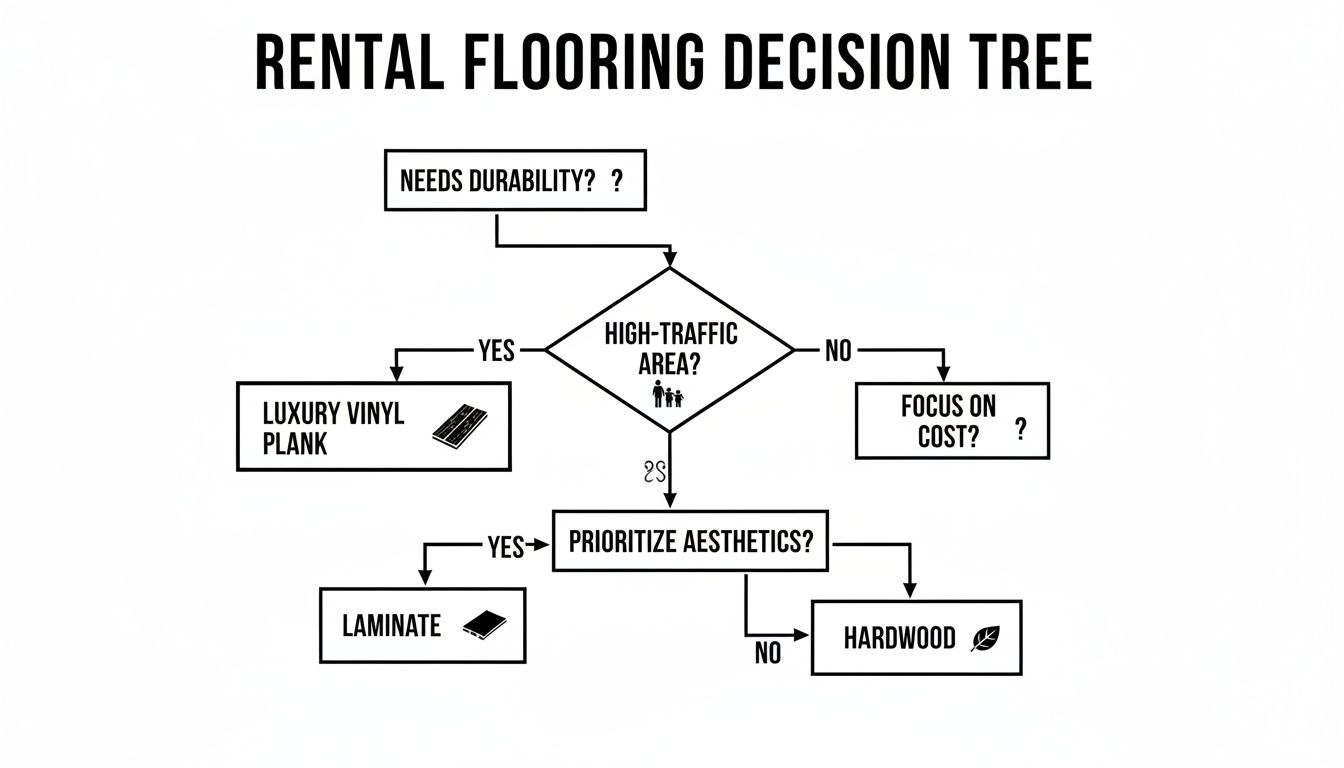
Think of it as a quick reference guide. It helps you see how things like high traffic, budget, and the look you're going for should point you toward specific materials like LVP, laminate, or even hardwood.
What Color And Style Appeal To The Most Tenants
When you're choosing flooring for a rental, your personal taste takes a backseat. The real goal is to create a clean, neutral canvas that allows potential tenants to see their own belongings in the space. You want them to walk in and immediately start picturing where their sofa will go.
The most effective strategy, hands down, is to stick with neutral, mid-tone colors. We're talking about light-to-medium grays, versatile beiges, or warm, natural wood tones. These shades are chameleons—they work with just about any furniture style and do a brilliant job of hiding a little dust or a few scuffs between cleanings.
Try to steer clear of anything too extreme. Dark, dramatic floors might look cool, but they show every single piece of lint and can make a small room feel like a cave. On the flip side, very light floors like stark white or pale blonde can highlight every crumb and stain.
The best flooring color for a rental property is one that a tenant never consciously notices. It should feel clean, modern, and bright without demanding attention, creating a welcoming canvas for any style.
As for style, you can almost never go wrong with a classic, clean wood-look plank. It has a timeless appeal that just feels more premium than other options. This is exactly why LVP and laminate in realistic oak or hickory finishes are so popular—they give you a high-end look that helps get units rented faster.
Is Professional Installation Worth The Cost
For a rental property, my answer is almost always a resounding yes. It's tempting to think you can save a few hundred dollars by installing click-lock LVP or laminate yourself, but a botched installation can cost you much, much more in the long run.
Professional installers have the right tools and, more importantly, the experience to do the job correctly. They know how to properly prep the subfloor, which is a critical step many DIYers either rush or skip entirely. An uneven subfloor is a recipe for disaster, causing planks to separate, buckle, or even crack down the road.
Here’s what you’re really paying for with a professional install:
- Speed and Efficiency: A pro crew can knock out a job in a fraction of the time, minimizing your vacancy period and getting rent coming in sooner.
- Warranty Protection: Many flooring manufacturers won’t honor their product warranty unless the material is installed by a certified professional.
- Long-Term Durability: A proper installation means tight seams, the right expansion gaps, and a flawless finish that will hold up to the wear and tear of tenant life.
Think of professional installation less as a cost and more as an insurance policy on your investment. That upfront expense is a small price to pay to avoid the nightmare of costly repairs and premature replacement.
How Can I Maximize The Lifespan Of My Flooring
Getting the most life out of your flooring is a two-pronged approach: make a smart choice upfront and then be proactive with maintenance. It all starts with the product you select. For a busy rental, investing in LVP with a thicker wear layer (12 mil is good, but 20 mil is ideal) or choosing a textured hardwood that camouflages minor scratches will pay for itself over time.
Once the floor is in, clear communication with your tenants is your best tool. I always recommend giving them a simple "Flooring Care Guide" when they move in. This isn't about being bossy; it's about providing simple, helpful tips to protect your property.
Your care guide should be short and sweet, including things like:
- Recommended Cleaners: Name a specific, affordable pH-neutral cleaner for their LVP or laminate.
- Furniture Pads: Leave a small welcome gift of felt furniture pads. It’s a cheap gesture that goes a long way.
- No Steam Mops: Explicitly tell them not to use steam mops, which can force moisture into seams and ruin the floor.
- Reporting Spills: Encourage them to wipe up spills right away and to let you know about any major leaks immediately.
When you give tenants these simple guidelines, you empower them to take good care of the floor. That protects your asset and makes your job a lot easier during turnover.
A durable, well-maintained floor is the foundation of a profitable rental property. If you need expert flooring installation or other renovation services for your investment properties, Garner Construction & Maintenance delivers professional results that stand the test of time. Visit us online to discuss your next project!