

So, you’re thinking about remodeling your bathroom. The first question on everyone's mind is always the same: "What's this actually going to cost me?" It’s the million-dollar question—or, more accurately, the several-thousand-dollar question.
Let's get straight to it. The national average for a bathroom remodel hovers around $16,500. But honestly, that number is just a signpost. Most homeowners we work with see their projects land somewhere between $8,000 for a smart, focused update and $45,000 for a major overhaul. The final tally really boils down to three things: the size of your space, the quality of the materials you fall in love with, and the cost of skilled labor in our area.
What a Bathroom Remodel Really Costs
Before you start pinning your dream vanities and rain showers, it helps to think of your budget not as a single, scary number, but as a flexible range. The price tag moves up or down based on how ambitious you want to get. Are we talking about a simple facelift or a complete, down-to-the-studs transformation? At Garner Construction & Maintenance, our first job is to help you set realistic expectations so there are no surprises down the road.
A few key decisions will steer your budget more than anything else:
- Project Scope: There's a world of difference between a cosmetic refresh (think new paint, updated fixtures, and a new vanity) and a full gut job that involves moving walls or relocating plumbing. One is a weekend warrior's dream; the other is a job for seasoned pros.
- Material Quality: You can find great-looking ceramic tile and a ready-to-go vanity at a big-box store for a modest price. On the other hand, custom-built cabinetry and imported marble will naturally carry a premium price tag.
- Labor Complexity: The more detailed the work, the more time it takes. Laying a complex herringbone tile pattern or rerouting electrical wiring for new sconces requires a higher level of skill and, therefore, a larger labor investment.
Understanding Remodel Cost Tiers
To make sense of it all, we find it helpful to break projects down into three general tiers. Think of these as different levels of investment and finish, giving you a quick way to gauge where your vision fits financially.
It's important to know that we're currently seeing a 4-6% increase in remodel costs compared to last year. This is driven by a shortage of skilled tradespeople and rising material prices, which makes having a solid budget more crucial than ever.
But here’s the good news: a bathroom remodel is one of the smartest investments you can make in your home. Even with rising costs, a mid-range remodel often recoups 65-80% of its value when you sell. You can dive deeper into the latest remodeling cost trends on USACabinetStore.com. This is why working with an experienced team like ours at Garner Construction isn’t just about getting a beautiful bathroom—it’s about protecting and maximizing your home’s value for years to come.
To give you a clearer picture, here’s a quick breakdown of what you can generally expect at each budget level.
Bathroom Remodel Cost Tiers at a Glance
| Remodel Tier | Average Cost Range | Typical Scope & Materials |
|---|---|---|
| Budget-Friendly | $5,000 - $12,000 | A cosmetic refresh. Includes new paint, replacing the vanity and toilet, updating faucets and lighting, and installing a pre-fabricated shower/tub unit. Materials are typically stock items from home improvement stores. |
| Mid-Range | $12,000 - $25,000 | The most common project. Involves replacing all fixtures, adding a new tile floor and shower surround, a semi-custom vanity with a stone countertop, and improved lighting. Plumbing might be slightly moved but stays in the same general location. |
| High-End / Luxury | $25,000 - $45,000+ | A full gut renovation. This often means expanding the bathroom's footprint, relocating plumbing and electrical, custom cabinetry, natural stone countertops and tile, a frameless glass shower, a freestanding tub, and high-end fixtures. |
This table is a great starting point, but remember every project is unique. The best way to get an accurate estimate is to have a conversation about what you want to achieve in your space.
Decoding Your Itemized Remodel Budget
Think of your bathroom remodel budget as a detailed recipe. It's not just one big number; it’s a list of individual ingredients and steps, each with its own cost, that all come together to create the final product. Getting a handle on this itemized bathroom remodel cost breakdown is the single most important thing you can do to keep your project on track and make smart decisions.
Every line item on a contractor's estimate represents a specific part of the job, from ripping out the old stuff to installing the shiny new fixtures. Let’s pull back the curtain on these core components so you know exactly where your money is going.
The Foundational Work: Demolition and Prep
Before any of the beautiful new materials can come in, the old bathroom has to come out. This first step, demolition and prep, will typically eat up about 5-10% of your total budget.
This is more than just swinging a sledgehammer. It’s a careful process of removing old fixtures, flooring, tile, and vanities without damaging the underlying structure. It also covers crucial prep work, like patching up drywall or reinforcing the subfloor, which sets the stage for a perfect finish.
A common mistake homeowners make is to rush or underestimate this stage. Proper, professional demolition—the kind we do at Garner Construction & Maintenance—is your first line of defense. It uncovers hidden problems like water damage or mold before they turn into bigger, more expensive headaches down the road.
The Unseen Heroes: Plumbing and Electrical
Hiding behind your beautiful new tile and sparkling faucets is the real engine of your bathroom: the plumbing and electrical systems. This is not the place to cut corners. Investing in licensed, skilled professionals here is an investment in your home's safety and longevity.
Combined, plumbing and electrical work often account for 15-25% of the total project cost.
- Plumbing Rough-In & Fixture Installation: This covers everything from running new water and drain lines to connecting the new toilet, sink, shower, and tub. Costs can jump significantly if you decide to move fixtures—relocating a toilet, for instance, means rerouting heavy-duty pipes through floors and walls.
- Electrical Work: This is all about bringing your bathroom up to modern safety codes. It includes adding new outlets (especially GFCIs near water), installing a high-powered ventilation fan, and putting in your new lighting scheme, whether that’s recessed cans, vanity sconces, or a statement chandelier.
The flowchart below gives you a great visual of how these costs scale across different project levels.
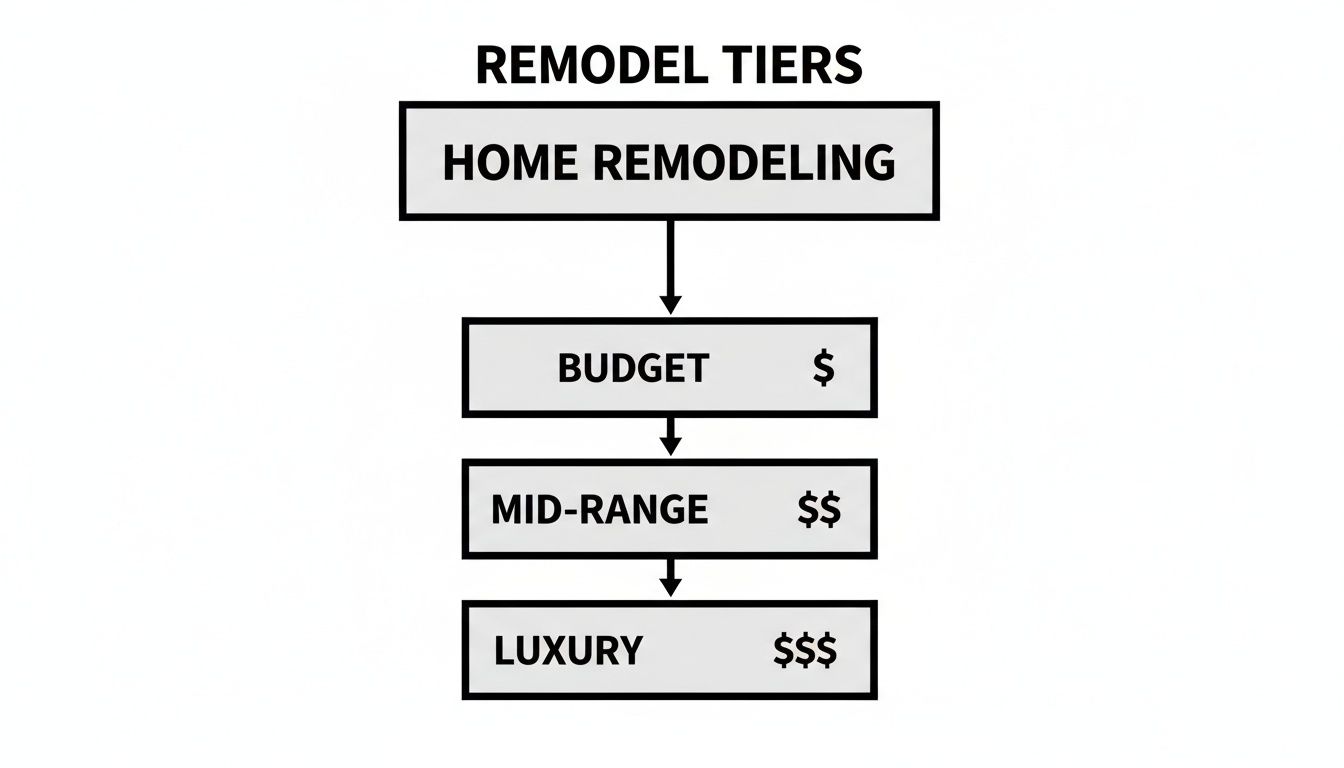
As you can see, the basic categories stay the same whether you're doing a simple refresh or a full-blown spa retreat. It's the level of investment in each category that defines the final outcome.
Building the Visuals: Flooring and Tile
Now we get to the fun part—where your bathroom's style really starts to shine. Flooring and tile are huge visual statements, and this part of the job can account for 10-20% of your budget. The final number really depends on your taste in materials.
The cost here breaks down into two main parts: the materials themselves and the labor to install them.
- Material Costs: On the budget-friendly end, you have classic ceramic and porcelain tiles. In the middle, you’ll find the incredibly popular Luxury Vinyl Tile (LVT), which offers a great mix of durability, waterproofing, and style. At the high end are natural stones like marble or intricate glass and mosaic tiles.
- Installation Labor: A simple grid pattern using large tiles is straightforward and less costly to install. But if you're dreaming of a complex herringbone layout or a detailed mosaic, expect the labor costs to go up—those intricate cuts and precise placements take a lot more time and skill.
The Finishing Touches: Cabinetry, Fixtures, and Finishes
Here it is: the final and often largest slice of the budget pie. All the things you see and touch every day fall into this category, and it can easily consume 30-45% of your total spend.
This category covers a massive range of products with equally massive price differences:
- Vanity and Countertops: A basic, off-the-shelf vanity from a big-box store might only be a few hundred dollars. In contrast, a custom-built, furniture-style vanity topped with a slab of quartz or marble can run into the thousands.
- Fixtures: This means your faucets, showerhead, toilet, and tub. You can get a standard chrome faucet for a low price, but a designer freestanding tub filler in a specialty finish like matte black or brushed gold is a significant splurge.
- Lighting and Accessories: Don’t forget the details! Sconces, overhead lights, mirrors, towel bars, and even the toilet paper holder all add to the final cost and the overall look.
Planning your spending carefully here is critical. For more tips on getting your finances in order, check out our guide on budgeting for home improvements. By understanding where every dollar goes, you can decide where to save and where to invest, creating a bathroom that’s the perfect blend of style, function, and value.
Labor vs. Materials: Where Your Money Really Goes
When you start dreaming up a new bathroom, your mind naturally goes to the tangible things. You picture that beautiful quartz countertop, the perfect tile, or a rainfall showerhead you saw online. It’s the fun part! But those material choices only tell one side of the budget story. The other, and often larger, side is the cost of the skilled labor needed to put it all together.
To get a real handle on your bathroom remodel cost breakdown, you have to understand this balance. Picture your total budget as a pie. For most standard, mid-range remodels, that pie gets sliced pretty evenly down the middle: about 50% for materials and 50% for labor.
Of course, that’s just a starting point. This 50/50 split can tilt in either direction. If you fall in love with high-end, imported marble, the material slice of the pie will obviously get bigger. On the flip side, if your new layout requires moving a toilet or shower drain, the labor slice will expand to cover that complex work.
Why Skilled Labor Is an Investment, Not Just an Expense
It’s easy to look at labor as a line-item expense you want to shrink. But it’s much smarter to see it as an investment in a job done right. A flawless installation of affordable, simple tile will always look and perform better than a sloppy installation of expensive, luxury stone. It’s the craftsmanship that makes the materials shine and ensures your new bathroom will last.
Think of it like this: You can buy the best ingredients in the world, but without a talented chef, you’re not going to get a gourmet meal. The skill of the tradespeople is every bit as important as the quality of the fixtures.
This is precisely where bringing in a professional team like Garner Construction & Maintenance pays off. We handle the coordination of all the experts whose skills are absolutely essential for a safe, beautiful, and durable remodel.
The Key Players on Your Remodel Team
A proper bathroom renovation isn't a one-person job. It requires a handful of specialized trades, each with a critical role. Their expertise is what stands between you and a future filled with leaks, electrical issues, or structural problems.
Here are the pros you'll find on a well-run job site:
- Plumbers: They’re among the first to arrive after demo to map out the "rough-in" plumbing and the last to leave after setting the fixtures. Their work is what guarantees your toilet flushes correctly and your shower doesn't leak into the floor below.
- Electricians: They handle the critical task of wiring for lights, outlets, and ventilation fans. They make sure everything is compliant with modern safety codes, especially installing GFCI outlets near sinks and showers to prevent any risk of electric shock.
- Tile Setters: This is a true craft. A skilled tile setter delivers perfectly level floors, laser-straight grout lines, and a completely waterproof shower that protects your home’s framing from moisture for decades to come.
- Carpenters & Drywall Finishers: These are the pros who build the room's skeleton. They handle everything from framing new walls and installing the vanity to hanging and finishing drywall, creating the flawless canvas for your paint and tile.
Investing in a coordinated team that manages these specialists is the key to a smooth project. It eliminates the logistical nightmare of juggling different contractors and ensures your bathroom is built correctly and efficiently the first time.
How Bathroom Size and Project Scope Drive Costs
When you start planning a bathroom remodel, two things will shape your budget more than anything else: the actual size of the room and the scope of what you want to accomplish. It’s pretty intuitive, really. Giving a small powder room a quick facelift is a completely different ballgame than gutting and expanding a primary suite.
Think of it like packing for a trip. A quick weekend getaway just needs a small duffel bag—easy and cheap. But moving across the country? That requires a massive moving truck, a ton of work, and a much bigger budget. Your bathroom remodel works the same way.
How Square Footage Impacts Your Budget
In the world of home renovation, you’ll hear contractors talk a lot about "cost per square foot." While that's a handy metric for, say, flooring a living room, it can be a little deceiving when it comes to bathrooms.
A bathroom packs an incredible amount of complexity into a tiny space. You've got plumbing, electrical wiring, waterproofing, ventilation, and expensive fixtures all crammed together. Because of that density, the cost-per-square-foot for a bathroom is almost always higher than for any other room in the house.
So, instead of getting hung up on that one metric, it’s more helpful to look at typical cost ranges for standard bathroom sizes. This gives you a much more realistic picture of what to expect.
Here’s a look at what different bathroom sizes might cost to remodel. These are just estimates for a mid-range project, of course, but they provide a solid starting point for your planning.
Sample Bathroom Remodel Costs by Size
| Bathroom Type / Size | Average Cost Range (Mid-Range) |
|---|---|
| Powder Room (Half-Bath) | $3,000 – $7,000 |
| Guest Bathroom (Full Bath) | $8,000 – $15,000 |
| Primary Bathroom (Mid-Size) | $15,000 – $25,000 |
| Large Primary Bathroom | $25,000+ |
As you can see, even a seemingly small jump in square footage can lead to a significant price increase. It's not just about buying more floor tile; it means a bigger vanity, a larger shower that needs more waterproofing and wall tile, and more labor to put it all together. You can dive deeper into national averages and see how these figures compare on websites like Angi.com.
The key takeaway is that even small increases in square footage can lead to significant cost jumps. It’s not just more floor tile; it’s potentially more vanity space, a larger shower, and more complex labor.
The Three Levels of Project Scope
Beyond just the size of your bathroom, what you actually plan to do in there is the other half of the budget equation. We generally see projects fall into one of three categories.
1. The Cosmetic Refresh This is the most straightforward and budget-friendly approach. Think of it as giving your bathroom a new outfit without changing its underlying bone structure.
- What it usually includes: A fresh coat of paint, swapping out the vanity and faucet, updating the light fixtures, and maybe installing a new toilet.
- What you’re not doing: Moving plumbing, changing the layout, or tearing out major tile.
- This is perfect for: Bathrooms that work just fine but are stuck in a different decade, style-wise.
2. The Full Gut Remodel (Same Layout) Now we're getting more serious. This is where you replace everything in the room, but you keep the original footprint exactly as it is.
- What it usually includes: Tearing everything out down to the studs—the old shower, the floor, the vanity, everything. Then, you install all-new plumbing fixtures, new tile, a new vanity, and updated electrical.
- The big cost-saver: You’re not moving any walls or relocating the toilet, shower, or sink. Keeping the plumbing and vents in their original spots saves a ton of money on labor.
- This is perfect for: Getting a completely new, top-to-bottom look without the expense and complexity of structural changes. You can learn more about how this works in our guide to the cost of a small bathroom remodel.
3. The Major Renovation (Reconfiguration) This is the top tier—the most complex and expensive type of remodel. This is where you’re not just replacing what’s there, but fundamentally changing the layout of the room.
- What it usually includes: Everything from a gut remodel, but also moving walls to make the bathroom bigger, relocating the toilet’s plumbing stack, or shifting the shower drain to the other side of the room.
- Why it costs so much more: As soon as you start rerouting plumbing and electrical lines inside walls and under floors, the labor costs climb steeply. This is intricate work that requires licensed, highly skilled professionals.
- This is perfect for: Fixing a truly awkward or dysfunctional layout, or when you’re building the primary bathroom of your dreams and aren't willing to compromise.
Smart Ways to Save Money and Where to Splurge
A great bathroom remodel isn't about throwing money at the project—it's about making your money work smarter. Knowing where to cut back and where to invest your dollars is the secret to getting a space you love without breaking the bank. It’s all about a strategic approach that balances budget with long-term value.
Think of it like packing for a big trip. You might buy travel-sized toiletries to save on space and cost, but you wouldn't cheap out on a durable suitcase that has to protect everything inside. Your bathroom budget is no different. The trick is to save on the cosmetic stuff so you have more to spend on the foundational elements that really count.
Strategic Savings: High-Impact, Low-Cost Choices
Saving money doesn't mean you have to settle for a bathroom you don't love. A few clever choices can dramatically lower your overall costs without compromising the final look and feel. The key is to be frugal with things that are either easy to upgrade later or have fantastic, affordable alternatives.
Here are a few of the most effective ways our clients trim their budgets:
- Keep Your Current Layout: The single most impactful way to control costs is to keep the toilet, shower, and sink right where they are. Moving plumbing is a major job that involves opening up walls and floors, quickly adding thousands of dollars in labor to your project.
- Choose Smart "Look-Alike" Materials: You don't need real marble to get that luxe look. Modern materials like luxury vinyl tile (LVT) can beautifully mimic natural stone or hardwood for a fraction of the price, and they’re often more durable and water-resistant. The same goes for quartz countertops, which deliver the elegance of marble without the hefty price tag and constant maintenance.
- Handle Minor Demo and Painting Yourself: If you're up for a little sweat equity, taking on jobs like tearing out an old vanity, pulling up laminate flooring, or painting the walls can save you hundreds in labor costs. Just make sure to leave the tricky plumbing and electrical work to the pros.
Where to Splurge: Your Best Long-Term Investments
While it's tempting to cut corners everywhere, some things are absolutely worth the extra investment. Spending more on these key areas isn't just about luxury; it’s about ensuring your bathroom is safe, durable, and a joy to use for years to come. Skimping here often leads to much bigger, more expensive headaches down the road.
Think of splurging as buying peace of mind. Investing in professional, high-quality installation for the hidden parts of your bathroom is the best insurance policy against future leaks, mold, and other expensive problems.
Here’s where putting your money really pays off:
- Professional Waterproofing: What you can't see behind the walls is often the most important part of your remodel. A flawlessly waterproofed shower system, expertly installed by a team like Garner Construction & Maintenance, is your number one defense against the slow, silent leaks that cause rot and structural damage.
- High-Quality Tile Installation: The difference between a DIY tile job and a professional one is night and day. A skilled tile setter ensures perfectly straight grout lines, level surfaces, and a flawless finish that truly elevates the entire look of the room. This is one of those things you'll notice every single day.
- A Powerful, Quiet Ventilation Fan: A cheap, noisy fan is a classic mistake. Proper ventilation is absolutely critical for preventing mold and mildew. Investing in a high-performance fan protects your paint, your finishes, and your family’s air quality—a small splurge with a huge long-term payoff.
Let's Build Your New Bathroom Together
So, you've made it this far. You've waded through the numbers, learned what drives costs, and have a much clearer picture of what it takes to remodel a bathroom. That's the hardest part, and you've already tackled it. Now, you're not just dreaming anymore—you're planning a smart, valuable investment in your home.
The final piece of the puzzle is finding the right team to bring your vision to life. That's where we come in. At Garner Construction & Maintenance, our goal is to turn a potentially stressful process into an exciting journey that ends with a space you'll love for years to come.
A Clear and Simple Remodeling Experience
We've been doing this a long time, and we've fine-tuned our process to be as straightforward and transparent as possible. We know you want clarity and communication, so that’s exactly what we provide from the very first phone call.
Here’s a look at how we work with you:
- The First Conversation: It all starts with listening. We sit down with you to talk about your ideas, what you need the space to do for you, and what your budget looks like. This isn't just a sales pitch; it's the foundation for your entire project.
- A No-Surprises Estimate: Based on our talk, we'll put together a detailed, line-by-line estimate. You’ll see exactly where every dollar is going—from the tile to the plumber’s time. No fuzzy math, no hidden costs.
- One Point of Contact: Once we get started, you won't be juggling calls from a half-dozen different people. You'll have one dedicated project manager who handles all the scheduling, coordinates our skilled trades, and keeps you in the loop every step of the way.
- The Final Walkthrough: We're not done until you say we're done. When the last tile is set and the paint is dry, we'll walk through the new space with you to make sure every single detail is perfect. Your complete satisfaction is our finish line.
Our Promise to You
A beautiful bathroom is the goal, but how you get there matters just as much. Our reputation is built on the trust we earn by respecting your home, your time, and your budget.
We promise a professional, headache-free remodel. It’s that simple. We manage your project with the same level of care we’d put into our own homes.
Choosing a contractor is a big deal. To help you feel even more confident, we've put together a guide on the right questions to ask a general contractor before you sign any contract.
You’ve done the homework. You understand the costs. The next step is the exciting part.
Let's build something great together. Contact Garner Construction & Maintenance today to schedule your consultation and get started with a team you can truly count on.
Answering Your Final Questions About Remodel Costs
It's completely normal to have a few last-minute questions, even after you've mapped everything out. Think of this as the final walkthrough before we start swinging hammers. We've gathered the most common questions we get from homeowners to give you that last bit of clarity and confidence for your bathroom remodel cost breakdown.
Let's get right into what's probably on your mind.
How Long Will My Bathroom Be Out of Commission?
This is always a top concern because it directly affects your daily routine. For a simple facelift—think new paint, fixtures, and a vanity swap—we might only be in and out in a few days to a week. But for a full-gut remodel of a standard bathroom, you should realistically plan for three to five weeks from the first day of demolition to the final polish.
A few things can stretch that timeline:
- Custom Pieces: If you've ordered a custom-built vanity or special-order tile from Italy, lead times can add weeks before we can even start that part of the job.
- The Inspection Dance: Projects requiring permits mean we have to pause for city inspectors to sign off on plumbing and electrical work. This can add a few days depending on their schedule.
- Unwelcome Surprises: The biggest wild card is what’s hiding behind your walls. Finding old water damage or mold means we have to stop, fix the problem properly, and only then can we continue.
Do I Really Need a Contingency Fund?
Yes. We tell every single client this is non-negotiable. It's the single best way to ensure your remodel stays a positive experience instead of a stressful one. No matter how meticulously we plan, old houses, in particular, love to hide surprises.
The industry standard is to set aside a contingency fund of 10-20% of your total budget. This isn't "extra" money; it's your project's insurance policy. It covers things like discovering the plumbing isn't up to code or finding a soft spot in the subfloor. If we don't touch it, fantastic! You've got a bonus for some upgrades.
Think of this buffer as your peace of mind. It ensures a small hiccup doesn't force you to compromise on the tile you love or the fixture you've been dreaming about.
What Should I Expect to Pay, Really?
Breaking it down by tiers helps set realistic expectations. A basic, cosmetic-only refresh can start around $6,000. We're talking paint, a new toilet, and maybe some new light fixtures, but no major plumbing moves.
Most homeowners land in the $12,000-$16,500 sweet spot for a full, down-to-the-studs remodel that keeps the existing layout. This typically covers a new vanity, all-new tile, lighting, and fixtures. High-end remodels jump to $25,000-$35,000+, and for luxury projects with major layout changes and custom everything, costs can easily surpass $40,000. For a deeper dive into these numbers, you can explore a detailed cost analysis on TheHomeTrotters.org.
Can I Save Money by Sourcing My Own Materials?
It's a tempting thought, and we get asked this a lot. The short answer is, maybe, but it often comes with hidden costs.
While you might find a deal on a vanity online, contractors usually get trade discounts you can't access. More importantly, when we supply the materials, we take on all the risk. We're responsible for making sure the right tub shows up, that it's not cracked, and that it arrives when we need it. If a homeowner-supplied faucet is the wrong size or arrives damaged, the project can grind to a halt for days or weeks, creating costly delays.
Honestly, letting your contractor handle the logistics using their trusted suppliers is almost always the smoother, more valuable path in the long run.
With these key points covered, you're in a great position to move forward confidently. When you’re ready to turn those plans into reality, the team at Garner Construction & Maintenance is here to make the entire process clear, professional, and maybe even a little fun.