

When people ask me, "What does a bathroom remodel cost?" I usually tell them it's a bit like asking, "How much does a car cost?" The answer really depends on whether you're looking for a reliable daily driver or a luxury sports car. For a bathroom, the average cost lands around $16,500, but that's just a starting point. Most projects we see fall somewhere between a simple $8,000 refresh and a full-blown $45,000 custom overhaul.
The final number on your invoice is a direct result of the project's size, the materials you fall in love with, and how much you want to change things up.
Understanding Your Bathroom Remodel Budget
Thinking about your budget is the very first step, and it sets the stage for everything that follows. I like to compare it to planning a big trip. A quick weekend getaway is going to have a very different price tag than a two-week European vacation. Both are great, but the scope, features, and final cost are in completely different leagues.
The same idea holds true for your bathroom. A cosmetic facelift—maybe some new paint, a modern vanity, and updated fixtures—is your weekend trip. A major renovation that involves moving walls, rerouting plumbing, and installing high-end finishes like natural stone and custom tile? That's your luxury tour. The average cost for a bathroom remodel isn't one set number; it’s a wide spectrum.
Key Financial Benchmarks to Know
Before you start picking out tile, it helps to get familiar with a few key numbers that we contractors use to frame a project. These benchmarks give you a solid footing for figuring out where your own project might land on the cost spectrum.
- National Average Cost: Across the country, the average bathroom remodel hovers around $16,500. However, the real-world range is huge, with most people spending between $8,000 and $45,000. The final cost really comes down to the scope, size, and even your zip code. You can find more great insights on project costs and ROI over at USA Cabinet Store.
- Cost Per Square Foot: A great way to estimate is by looking at the cost per square foot. For a standard 5x7-foot bathroom, you can expect to pay anywhere from $175 to $325 per square foot, which totals out to roughly $6,500 to $13,500.
- Return on Investment (ROI): Here's the good news—a bathroom remodel is a smart way to invest in your home. Mid-range projects almost always deliver a solid return, with homeowners typically getting back 65-80% of what they spent when it's time to sell.
A well-planned bathroom remodel does more than just update your home; it's an investment in your property's long-term value and your daily quality of life.
To give you a clearer picture, let's break down what you can expect at different budget levels. This table gives a quick overview of typical costs and potential returns, which should help you match your dream bathroom with a realistic financial plan.
Bathroom Remodel Costs At a Glance
| Remodel Tier | Average Cost Range | Cost Per Square Foot | Typical Return on Investment (ROI) |
|---|---|---|---|
| Basic Refresh | $6,000 – $12,000 | $150 – $200 | 75% – 80% |
| Mid-Range Remodel | $15,000 – $30,000 | $200 – $350 | 65% – 70% |
| High-End Overhaul | $40,000+ | $400+ | 60% – 65% |
As you can see, the numbers vary quite a bit. A basic refresh offers the best bang for your buck in terms of ROI, while a high-end overhaul is more about creating a personalized luxury space. Understanding where you fit helps us at Garner Construction & Maintenance tailor the project perfectly to your goals.
How Your Remodel Budget Is Actually Spent
Seeing the total cost of a bathroom remodel is one thing, but really understanding where every dollar is going? That’s where you gain the power to make smart decisions. Think of your budget as a whole pie. We're about to slice it up to see just how big each piece—from labor to that vanity you've been eyeing—really is.
When you break it down, those big, abstract numbers suddenly turn into real, tangible parts of your project. It’s how you see that one "small" change might have a huge ripple effect on the final price tag, and it helps you decide where to spend and where to save.
This chart gives you a quick snapshot of the typical cost ranges you can expect, from a basic refresh all the way up to a full luxury overhaul.
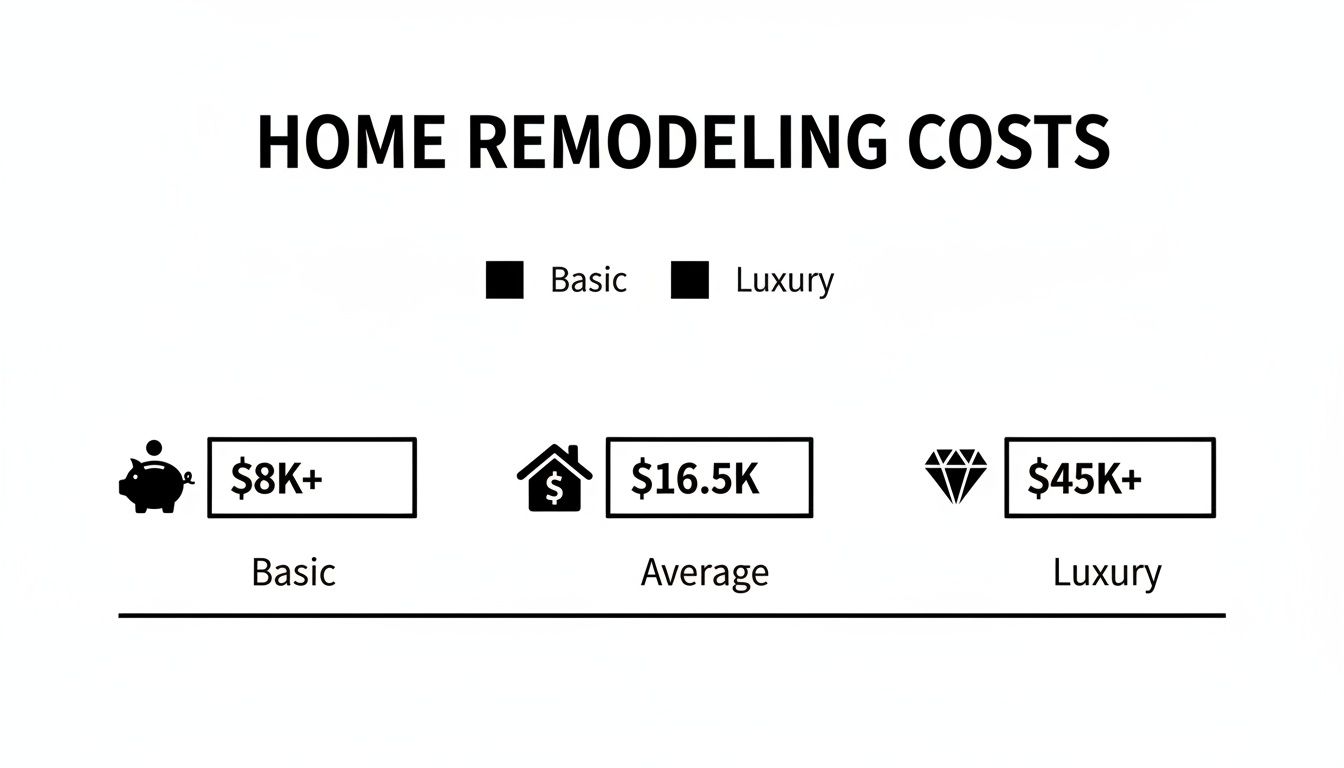
As you can see, the jump from basic to luxury is a big one. That gap is all about the quality of the materials you choose and the amount of skilled work required to bring your vision to life.
The Two Pillars of Your Budget: Labor and Materials
At the end of the day, every single item on your bathroom remodel estimate boils down to one of two things: labor or materials.
In our experience, the budget is usually split right down the middle, with labor taking up 40-60% of the total cost and materials making up the other 40-60%. This split isn't set in stone, though. A project with simple, budget-friendly finishes will naturally have labor as the bigger slice of the pie. On the other hand, if you’re dreaming of imported marble and a custom-built vanity, your material costs can easily climb higher than the cost of labor.
It's so easy to just focus on the sticker price of a new tub or vanity. But remember, every single thing you buy needs a skilled professional to install it correctly—and that installation is a huge part of the real cost.
A Typical Budget Breakdown
So, let's get more specific. While every project has its own unique quirks, here’s a pretty standard way a mid-range bathroom remodel budget gets divvied up:
- Labor (Plumbing, Electrical, Tiling, etc.): 40-60%
- Cabinetry and Vanity: 10-20%
- Fixtures (Tub, Shower, Toilet, Sink): 10-15%
- Flooring and Wall Tile: 7-10%
- Countertops: 5-7%
- Lighting and Ventilation: 5-7%
- Doors, Windows, and Finishes (Paint, Trim): 3-5%
This list really shines a light on why moving things around gets so expensive. If you decide to relocate the toilet or shower, you’re not just moving a fixture; you’re dramatically increasing the complex (and costly) plumbing and electrical work. Keeping your existing layout is probably the single most effective way to keep your budget in check.
Dissecting the Major Expense Categories
Let’s dig a little deeper into the big-ticket items that will make up most of your final bill. Knowing what goes into each helps you see where you can find savings and where it might be worth splurging.
Professional Labor Costs
This is almost always the biggest chunk of the budget. And it’s not just one person—it’s a whole team of specialists. You’re paying for the general contractor who orchestrates the entire project, the plumber, the electrician, the tile setter, and the painter. Good, skilled labor is what ensures your new bathroom is not only beautiful but also safe, functional, and up to code, protecting you from disasters like leaks or electrical faults later on.
Cabinetry and Vanity
The vanity is the centerpiece of most bathrooms, and its price can swing wildly. A basic, off-the-shelf unit from a big-box store might only set you back a few hundred dollars. But a custom-built vanity made from premium wood with high-end hardware? That can easily run into the thousands. It's a choice that makes a massive difference to both your budget and your bathroom's style and storage.
Fixtures and Fittings
This bucket holds your tub, shower, toilet, and sinks. A standard acrylic tub is a perfectly fine, budget-friendly option. A freestanding cast iron soaking tub, on the other hand, is a luxury statement piece with a price to match. The same goes for toilets—a standard model is a world away from a smart toilet with all the bells and whistles. This logic applies to faucets and showerheads, too, where the brand, finish, and materials are the main drivers of cost.
Tile and Surfaces
The cost of your tile work really comes down to two factors: the price of the material itself and how tricky it is to install. For example, large-format porcelain tiles are a popular and moderately priced option, but they require a very skilled hand to install perfectly. If you opt for a natural stone like marble, you're paying a premium for the material and for the specialized labor needed to cut, install, and seal it correctly. The look is stunning, but the impact on your budget is just as dramatic.
If you're mapping out several home improvement projects, you can see how these cost factors play out in other areas, too. Check out our guide on estimating interior painting costs for another example.
What Really Drives Up Your Final Cost?
Ever look at two bathroom remodels that seem pretty similar and wonder why one cost a fortune while the other didn't? The final number on your estimate isn't just a random figure; it's the sum of dozens of individual choices you'll make along the way. Getting a handle on these key variables is the first step to building a budget that makes sense and keeps sticker shock at bay.
Think of it like ordering a pizza. The basic cheese pie has a starting price, but every single topping you add—from pepperoni to fancy prosciutto—bumps up the final bill. In a remodel, those "toppings" are your choices in materials, the scale of the work, and the project's overall complexity.
The Scope of Your Project
The biggest single factor that dictates the average cost of a bathroom remodel is the scope of the work. Are you just swapping out a few fixtures for a fresh look, or are you tearing everything down to the studs and starting over? The difference in cost is massive.
- Cosmetic Updates: This is your bathroom’s version of a quick makeover. We're talking high-impact, low-effort changes like a fresh coat of paint, new light fixtures, an updated faucet, or maybe a new vanity top. The important part is that the core structure and plumbing stay exactly where they are, which keeps costs under control.
- Full Remodels: This is more like major surgery for your bathroom. It usually means gutting the space down to the bare studs, then replacing all the old plumbing and electrical before installing brand-new fixtures, tile, and cabinetry.
- Layout Changes: Taking a full remodel one step further is the most expensive path you can take. If you want to move the toilet to the other side of the room or convert a tub into a walk-in shower, you're getting into serious territory. This requires rerouting plumbing and electrical lines behind the walls, which adds a ton of labor and complexity to the job.
Here's a simple rule we live by: the more you touch what's behind the walls, the more you'll spend. Keeping your existing plumbing and electrical layout is the single most effective way to keep your budget in check.
Material Quality and Finishes
Right after the project's scope, your selection of materials and finishes will have the biggest say in your final bill. This is where you really get to personalize your space, but it's also where costs can climb surprisingly fast. For every item—from flooring to faucets—there's a whole spectrum of quality and price.
A standard ceramic tile, for instance, is a perfectly durable and budget-friendly choice for flooring. But if you fall in love with a high-end natural stone like marble, you aren't just paying more for the material itself; you're also paying for the specialized skills and extra time it takes to install it properly.
It's the same story with vanities. An off-the-shelf cabinet from a big-box store might only set you back a few hundred dollars. On the other hand, a custom-built, solid wood vanity can easily run into the thousands. Every choice is a trade-off between the look you want and the budget you have.
To see this in action, let's look at how these choices stack up.
Cost Impact of Common Remodel Decisions
| Component | Budget-Friendly Option & Est. Cost | Mid-Range Option & Est. Cost | High-End Option & Est. Cost |
|---|---|---|---|
| Vanity | Stock, pre-fab unit from a big-box store ($200 - $600) | Semi-custom with upgraded countertop ($800 - $2,500) | Fully custom cabinetry, solid wood, stone top ($3,000+) |
| Flooring | Vinyl or basic ceramic tile ($3 - $7/sq. ft.) | Porcelain tile or luxury vinyl plank (LVP) ($8 - $15/sq. ft.) | Natural stone or heated flooring systems ($20+/sq. ft.) |
| Shower/Tub | Prefabricated fiberglass insert ($500 - $1,500) | Acrylic or cast-iron tub with tiled walls ($2,000 - $5,000) | Custom walk-in shower with frameless glass ($6,000 - $15,000+) |
| Fixtures | Basic chrome faucets and showerheads ($150 - $400) | Brand-name fixtures in brushed nickel or bronze ($500 - $1,200) | Designer fixtures, specialty finishes, smart tech ($1,500+) |
This table makes it clear how quickly premium choices can inflate a budget. The key is to find the right balance for your home and your wallet.
Labor Costs and Your Location
Labor is the invisible engine that makes your entire remodel happen, and it usually accounts for a huge chunk of the total cost. The project's scope is directly tied to labor—the more complex the job, the more hours you’ll need from skilled plumbers, electricians, and tile setters.
On top of that, labor rates can vary wildly depending on where you live. Costs in a major city are almost always higher than in a small town due to differences in demand, overhead, and the general cost of living. This is why national averages can sometimes be a bit misleading.
The scale of your project is what pulls it all together. Industry data shows a full remodel averages between $25,000 to $80,000, while a partial update might land somewhere between $10,000 and $25,000. Even a minor refresh can run from $3,000 to $10,000, with the national homeowner average sitting around $12,125. For a deep dive, you can explore the full remodeling costs from Angi.com. This data really underscores why working with a local expert like Garner Construction & Maintenance is so important—we can give you an accurate, market-specific estimate that reflects what things actually cost right here.
Seeing the Numbers in Action with Sample Budgets
Okay, we've talked about percentages and cost breakdowns, but what does that actually look like for a real project? Sometimes, seeing concrete examples is the best way to understand how the average cost of a bathroom remodel translates from a spreadsheet to your home.
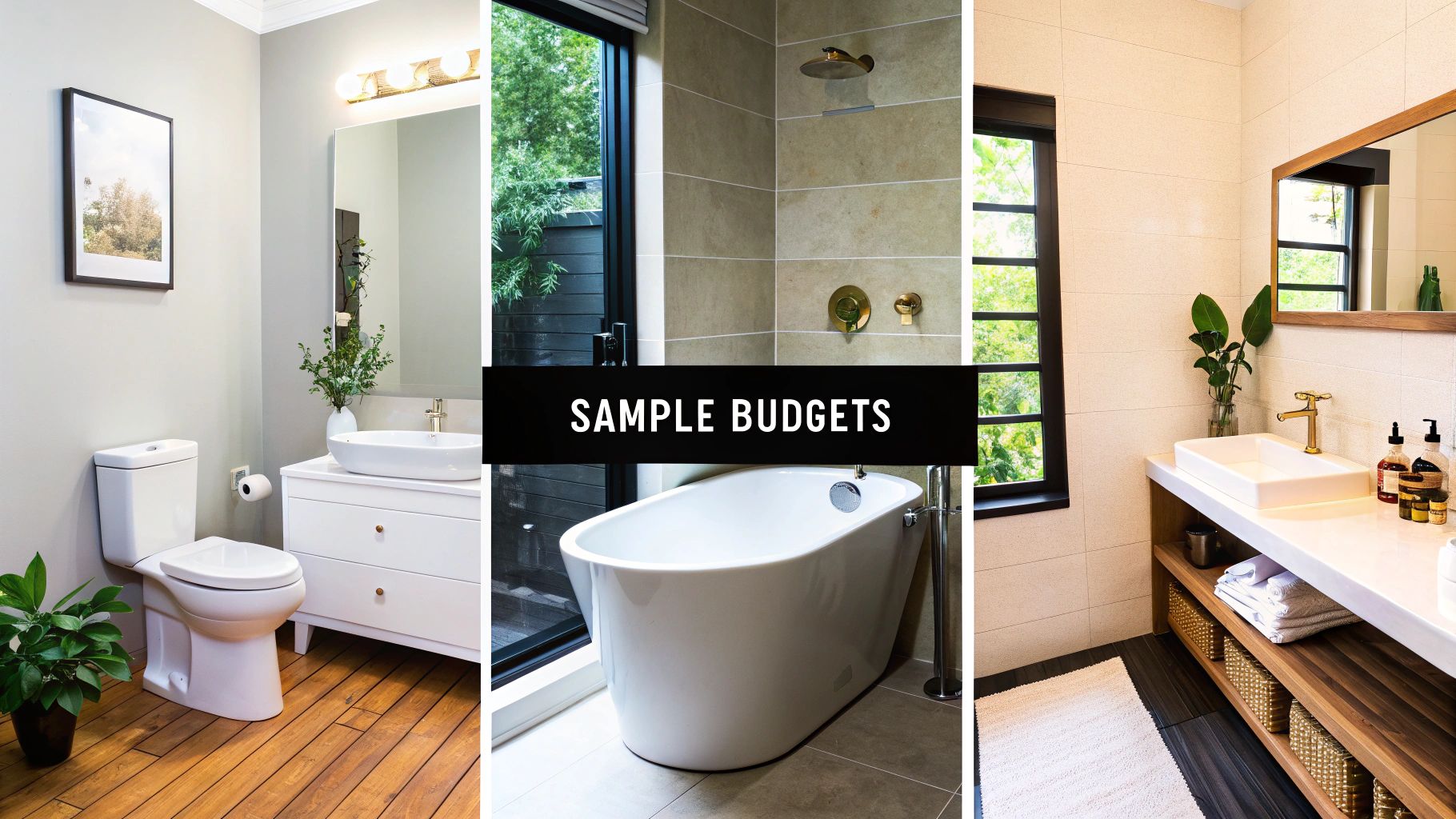
Let's walk through three different project levels. Think of these as common starting points that we see all the time, from a quick facelift to a full-blown spa retreat. You'll quickly see how choices in materials and scope dramatically change the final price tag.
Budget Example 1: The Basic Refresh
This project is all about getting the most bang for your buck. The goal is a major visual upgrade without moving any plumbing or electrical, which is where labor costs can really climb. It’s the perfect solution for a bathroom that works just fine but is stuck in another decade.
- Total Estimated Cost: $7,000 - $10,000
- Scope: Cosmetic updates only. No layout changes.
- Best For: Guest bathrooms, powder rooms, or prepping a home for sale.
Here’s a typical breakdown of where that money goes:
- New Vanity: A quality, pre-fabricated vanity with an integrated sink and countertop from a big-box store.
- Fixtures: Swapping out the old faucet, showerhead, and towel bars for a modern finish like matte black or brushed nickel.
- Lighting: Replacing a dated fixture with a new, brighter vanity light.
- Flooring: Installing durable and waterproof luxury vinyl plank (LVP) right over the existing floor.
- Paint: A fresh, professional coat of paint on the walls, ceiling, and trim.
- Toilet: A new, standard-efficiency toilet.
A Basic Refresh proves you don't need to tear everything out to make a huge impact. Smart, targeted upgrades can completely transform the feel of a space for a pretty modest investment.
Budget Example 2: The Mid-Range Remodel
This is the sweet spot for many homeowners and the project we tackle most often. It’s a full gut of the bathroom—everything comes out—but we keep the toilet, shower, and sink in their original spots to avoid expensive plumbing reroutes. The result is a bathroom that looks and feels brand new from top to bottom.
- Total Estimated Cost: $18,000 - $30,000
- Scope: Complete gut and replacement of all finishes and fixtures, but the original layout stays.
- Best For: A primary bathroom or main family bath that needs a total overhaul.
A mid-range budget opens the door to some significant improvements:
- Tub and Shower: A new bathtub paired with a fully tiled shower surround, complete with a recessed niche for shampoo and soap.
- Tile: Quality porcelain tile for both the floor and the shower walls.
- Vanity: A step up to a semi-custom vanity with a durable, non-porous quartz countertop.
- Plumbing Fixtures: Well-known, reliable brands for faucets and shower systems.
- Ventilation: A new, much quieter and more powerful exhaust fan to properly manage moisture.
- Lighting: Layered lighting, including an upgraded vanity fixture and a separate light/fan combo over the shower.
- Toilet: A more comfortable, chair-height model that's also more water-efficient.
This level of remodel dramatically improves both how your bathroom looks and how it functions. Interestingly, the cost of a small bathroom remodel often lands squarely in this mid-range tier because you still need all the same tradespeople (plumber, electrician, tiler) regardless of the room's size. To see how this plays out in a compact space, check out our guide on the cost of small bathroom remodels.
Budget Example 3: The Luxury Overhaul
Ready to build your personal spa? This is it. A luxury overhaul means we’re starting from the studs and re-imagining the entire space. We’ll often move walls, relocate plumbing, and bring in high-end materials and premium features for a truly custom result.
- Total Estimated Cost: $45,000+
- Scope: A complete gut renovation with layout changes, custom work, and premium materials.
- Best For: Creating a high-end primary suite or a show-stopping statement bathroom.
This budget allows for top-of-the-line everything:
- Layout Change: Moving plumbing and walls to create a more open and functional floor plan.
- Custom Walk-In Shower: A large, curbless shower with sleek frameless glass, multiple showerheads (like a rain head and a hand wand), and a built-in bench.
- Freestanding Tub: A beautiful soaking tub that acts as the room's centerpiece.
- Custom Cabinetry: A custom-built double vanity with high-end countertops, often marble or quartzite.
- High-End Tile: Natural stone like marble or designer porcelain tile.
- Heated Floors: Radiant in-floor heating is a game-changer on cold mornings.
- Smart Technology: Integrating features like smart mirrors with anti-fog technology, digital shower controls, or automated lighting.
Of course, these numbers are just a guide. The final cost can swing wildly based on your home's location and the bathroom's size. While national data shows mid-range projects average $180-$350 per square foot, the total investment can range from $3,000 for a tiny powder room refresh up to $120,000 for a massive, feature-packed primary bathroom. These examples should give you a solid foundation for beginning the conversation with your contractor.
Smart Ways to Reduce Your Remodel Costs
It’s one thing to know the average cost of a bathroom remodel, but it's another thing entirely to find clever ways to bring that number down without sacrificing the quality you expect. With a few strategic moves, you can get a bathroom that feels luxurious while keeping your budget from spiraling.
The biggest money-saver, hands down, is to keep your existing plumbing layout. Think of your bathroom's pipes as its skeleton—moving them around is a major operation.
Shifting a toilet, sink, or shower isn't just a simple swap. It means opening up walls and floors, which sends labor costs for plumbers and contractors through the roof. By updating fixtures in their current spots, you sidestep that huge expense and free up cash for the beautiful finishes you’ll actually see and enjoy every day.
Choose Smart Materials
You don't need to splurge on solid marble to get a high-end feel. The market is full of gorgeous, durable materials that deliver the look of expensive stone or wood for a fraction of the price.
- Porcelain & Ceramic Tile: These are the true champions of value and versatility. You can find them in thousands of styles, from convincing wood-plank looks to stunning marble replicas, all while getting better durability and water resistance for less money.
- Luxury Vinyl Plank (LVP): If you love the warmth of wood floors but not the potential for water damage, LVP is your answer. It's 100% waterproof, feels great underfoot, and costs significantly less than real hardwood or even a professional tile installation.
- Quartz Countertops: Want a vanity top that looks like stone but without the maintenance? Quartz is a fantastic alternative to marble. It doesn’t stain easily and never needs to be sealed, saving you money upfront and down the road.
Choosing these smart "lookalikes" lets you achieve the exact aesthetic you're going for without overspending. That frees up your budget for the things that make a real statement, like a standout vanity or a great light fixture.
The smartest remodels focus on value, not just price. It's about finding that sweet spot between durable materials that will last and a design you'll love for years to come.
Know When to DIY and When to Call a Pro
Getting your hands dirty can definitely cut down on labor costs. Things like painting, carefully demolishing old fixtures, or swapping out cabinet hardware are perfect weekend projects for a handy homeowner. They're low-risk tasks that can easily save you a few hundred dollars.
But some jobs are strictly for the pros. Plumbing, electrical work, and tile installation are not areas where you want to wing it. A tiny mistake, like a shower that isn't waterproofed correctly, can quickly turn into a nightmare of water damage, mold, and thousands of dollars in repairs.
Hiring a licensed professional for these critical tasks isn't just an expense; it’s an insurance policy on your investment. It guarantees the job is done right, safely, and to code. When you partner with a trusted team like Garner Construction & Maintenance, you get the peace of mind that your bathroom's foundation is built to last, protecting your home and its value.
How to Hire the Right Contractor for Your Project

Let's be honest: your choice of contractor is the single most important decision you'll make in this entire process. A great partner keeps the project smooth, on schedule, and on budget. The wrong one? That's a recipe for headaches, delays, and surprise costs.
Think of it less like a simple transaction and more like hiring a key team member. The time you spend doing your homework now will pay off tenfold down the line. You're looking for a pro you can genuinely trust to turn your vision into a reality, which means looking past the lowest price tag to find real experience and crystal-clear communication.
Vetting Your Candidates
Before a contract is even on the table, it's time to do some digging. Any contractor worth their salt will have a solid track record and be happy to provide the credentials that earn your trust.
Start by building a shortlist of potential pros. Once you have a few names, it's time to put them through a non-negotiable vetting process:
- Verify Licenses and Insurance: This is ground zero. Your contractor absolutely must be licensed to work in your state and carry both liability insurance and workers' compensation. This isn't just red tape—it’s what protects you from financial disaster if an accident happens on your property.
- Check References and Reviews: Don't just scan the testimonials on their website. Ask for a list of recent clients and actually call them. Find out what it was really like to work with them. How was their communication? Did they stick to the schedule? How did they handle the inevitable curveballs?
- Review Their Portfolio: A picture really is worth a thousand words here. Sift through their gallery of past projects to see if their style and quality match what you're imagining. Pay close attention to the fit and finish in the photos—the details tell the real story.
Understanding the Quote
Once you've narrowed it down to your top two or three contenders, ask each for a detailed, itemized bid. A vague, one-page quote is a massive red flag. A professional proposal should break down every piece of the puzzle, from labor costs to material allowances.
A trustworthy bid is a transparent one. It should clearly outline the scope of work, material allowances, labor costs, and a proposed payment schedule, leaving no room for expensive surprises down the road.
When the bids come in, resist the urge to immediately jump on the lowest number. An unusually low price can be a sign of inexperience, cheap materials, or a plan to cut corners. Instead, lay the quotes side-by-side and compare the line items. See where the costs differ and ask questions to understand why.
For a deeper dive, check out our guide on the essential questions to ask a general contractor. At Garner Construction & Maintenance, we know an informed client is a happy client. That's why we make transparent, upfront communication our top priority from the very first conversation.
Answering Your Top Bathroom Remodel Questions
Once you start seriously thinking about a remodel, the big, practical questions always bubble to the surface. It's one thing to dream about tile and tubs, but it's another to figure out how long your bathroom will be out of commission and what surprises might be lurking behind the walls. Let's dig into some of the questions we hear most often from homeowners just like you.
How Long Does a Typical Bathroom Remodel Take?
It’s easy to get swept up by home improvement shows that seem to wrap everything up in a weekend, but the reality is quite different. For a standard, full bathroom gut and remodel, you should plan for the actual construction to take somewhere between 4 to 8 weeks. Of course, a simple cosmetic refresh can be much faster, while a high-end project with a new layout will definitely push the timeline longer.
Keep in mind, that's just the hands-on part. Things like waiting for city permits to be approved, the lead time on custom-ordered vanity or tile, or finding unexpected water damage after demolition can all add to the clock. A good contractor will walk you through a detailed schedule from the get-go so you know exactly what to expect.
What Are the Most Common Hidden Costs?
The biggest budget-busters are almost always the ones you can't see until the walls come down. That's when we might find old problems that have to be fixed right, such as:
- Rotted Subfloors: Usually the result of a small, slow leak from a toilet or shower that went unnoticed for years.
- Outdated Plumbing or Electrical: If the wiring or pipes aren't up to current building codes, they have to be replaced for safety.
- Mold Remediation: A frequent find in bathrooms that have struggled with poor ventilation.
Beyond structural surprises, you might also run into unexpected permit fees or the added cost of changing your mind on a faucet or tile choice halfway through. This is precisely why we always advise clients to build a contingency fund of 10-20% of the total project cost.
A contingency fund isn't a sign of poor planning; it's a mark of smart, realistic planning. It transforms a potential crisis into a manageable bump in the road.
Can I Save Money by Managing the Project Myself?
Taking on the role of general contractor might seem like a surefire way to cut down on the average cost of a bathroom remodel, but it’s a massive undertaking. You’d be responsible for everything: finding, vetting, and scheduling the plumber, the electrician, the tile setter, the painter… the list goes on. You also have to make sure their work is high-quality and, most importantly, up to code.
For most people, the stress and time commitment just aren't worth the potential savings. Hiring a professional firm means you have an expert managing all those moving parts. We use our network of trusted, skilled tradespeople to make sure the job runs on schedule and is built to last.
Does a Bathroom Remodel Really Increase Home Value?
It absolutely does. In fact, a bathroom remodel is consistently one of the best home improvement projects for return on investment. A well-designed, mid-range remodel can often recoup 65-80% of its cost at resale.
But it’s not just about the numbers. A beautiful, modern bathroom is a powerful selling point that makes your entire home more appealing to buyers. It can be the very thing that helps your home sell faster and for a better price than the one down the street.
Ready to get answers tailored to your specific project? The team at Garner Construction & Maintenance is here to provide the clarity and expertise you need to move forward with confidence. Visit us at https://www.garnercandm.com to schedule your consultation.